A radiator base plate rarely gets much attention until something goes wrong. It is usually a flat piece of metal with a few holes, a machined face, and perhaps a gasket groove, and yet it is the point where the thermal, mechanical, and sealing requirements of a whole cooling assembly meet. It carries the core and the fins, spreads heat away from the components that generate it, and in liquid-cooled designs it often forms one wall of the coolant circuit.
What follows is a practical look at what a radiator base plate does, how material choice changes its behaviour, and which design and quality questions are worth settling before an order is placed.
Content
The name varies by industry and by team: heat sink base plate, cold plate base, radiator mounting plate, or simply the base. The function is consistent. A base plate is the structural and thermal foundation of a cooling assembly, and it normally carries four responsibilities at once.
Because one part carries all four roles, material and process cannot really be chosen independently. A plate that spreads heat beautifully but distorts during brazing will leak. A plate that stays perfectly flat but weighs twice what it needs to will cost driving range in an electric vehicle. Most of the engineering effort goes into balancing those two risks.
Most projects start with three candidates: pure copper, pure aluminum, and copper-aluminum composite. Each one solves a different part of the problem, so the right answer depends on which constraint is tightest in your programme, whether that is thermal margin, mass budget, or cost.
| Material | Thermal conductivity | Weight | Typical use |
|---|---|---|---|
| Pure copper | Very high | High | High-power electronics with small footprints |
| Pure aluminum | Moderate | Low | Large-area radiators where mass dominates |
| Copper-aluminum composite | High where it is needed | Low overall | EV cold plates, power modules, battery cooling |
Pure copper is the obvious answer when thermal margin is thin, but it is roughly three times denser than aluminum and considerably more expensive. Pure aluminum is the natural choice when the plate is large and weight matters more than peak conductivity. Copper-aluminum composite exists for the cases in between, which in practice means most electrified platforms.
Composite here does not mean a laminate glued together. It means two metals joined by roll bonding, so the interface is a continuous metallurgical bond rather than an adhesive layer. The copper face sits where the heat source is, which gives you spreading performance exactly where you need it. The aluminum body carries the structure, the mounting points, and the bulk of the volume, and it keeps both mass and material cost down.
Roll-bonded copper-aluminum stock is supplied single-sided or double-sided, as clad material or as a transition strip for joining dissimilar metals, and in foil gauges for current-carrying parts. For base plates the double-sided variant is often the interesting one, because it allows a copper face on the device side and a second functional face on the coolant side.
The benefits show up in three places: lower plate mass for the same spreading performance, lower total material cost than solid copper, and a bond interface that survives thermal cycling without the delamination risk of glued or soldered assemblies.
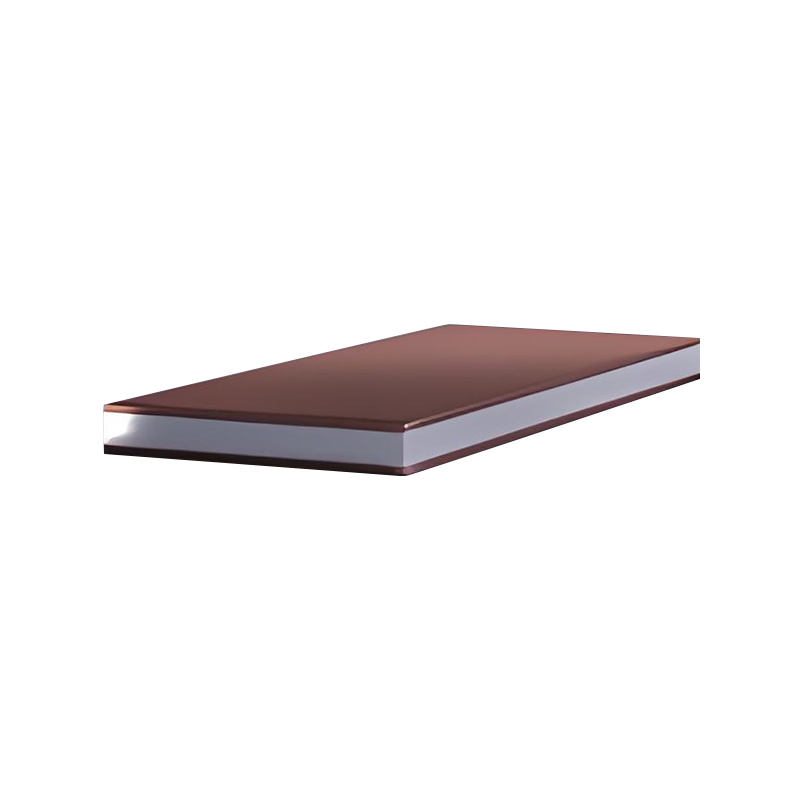 Double-Sided Copper-Aluminum Clad Material for Power BusbarsA copper-aluminum composite busbar that pairs conductive copper with lightweight aluminum to reduce mass while supporting high-voltage power transmission.View Product →
Once the material is fixed, a handful of details determine whether the plate performs in production and in service.
A base plate is a mating surface. Flatness drift after brazing, welding, or machining shows up as poor contact resistance on the thermal side and as leaks on the sealing side. It is worth agreeing on a flatness figure and a measurement method early, because the same plate can pass or fail depending on how it is checked.
Where copper meets aluminum, the quality of the bond is the whole point of the material. Sectioning and bond-strength testing on production samples tells you far more than a datasheet number, particularly after the plate has seen several hundred thermal cycles.
Copper and aluminum sit at different points of the galvanic series, so any exposed interface needs sensible protection. Coatings, edge treatment, and careful choice of fasteners all play a part, especially in cooling circuits where coolant chemistry and humidity vary by region.
 Lightweight Solution Metal Composites for Power Battery SystemsA product category featuring copper-aluminum composite materials and related components for EV, energy storage, and power battery applications.View Product →
The geometry looks similar across applications, but the requirements behind it differ a great deal.
Across all of them, the underlying challenge is the same: moving heat efficiently out of a component without adding mass or cost that the platform cannot absorb. Readers who want to go deeper into system-level behaviour can review this overview of thermal management of EV battery packs, which covers how the plate fits into the wider cooling architecture.
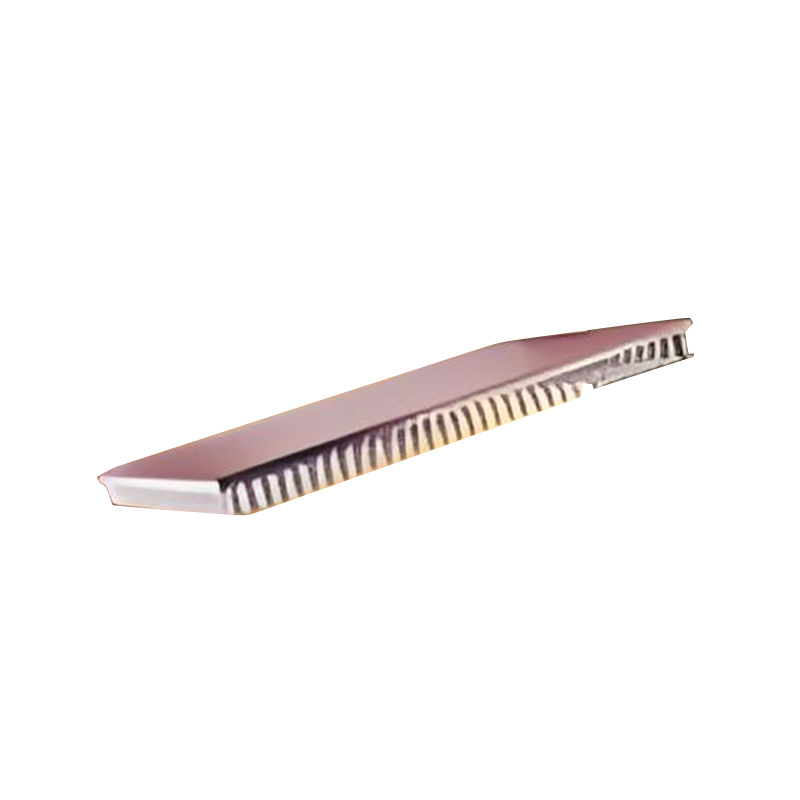 Radiator Base Plate for High-Efficiency Thermal ManagementA lightweight heat-dissipation component intended for power modules, LED lighting, communications, and new energy vehicles, with precision machining for radiator integration.View Product →
Material selection is only half of the decision. The other half is whether the supplier can hold the specification at volume. These are the questions we find most useful in early technical conversations.
Good answers to those five questions tell you more than any brochure. They also tend to reveal whether a supplier has actually produced this kind of part before, because the failure modes of a bonded base plate are not obvious from a general metals catalogue. Designers working on the battery side of the same problem may also find it useful to understand how battery pack protection is designed, since cold plates and protective components share the same packaging constraints.
A radiator base plate is a small part with an unusually wide set of jobs. It conducts, supports, seals, and mounts, and it has to keep doing all four after thousands of thermal cycles and years of vibration. Choosing between copper, aluminum, and a roll-bonded composite is really a question about which constraint you can afford to relax, and answering that honestly at the concept stage prevents most of the expensive surprises later.
If you are working through that trade-off now, it usually helps to talk it through with people who have made the same decision across several platforms. That kind of conversation costs nothing and tends to save a prototype round or two.

 Applet
Call Center:
 Tel:+86-0512-63263955
 Email :[email protected]
Copyright © Goode EIS (Suzhou) Corp LTD
 Insulating Composite Materials and Parts for Clean Energy Industry


 cn
cn English