A battery pack rarely fails politely. When one cell enters thermal runaway, the outcome of the whole pack comes down to how long the next cell holds out. Every layer sitting between those two cells is doing quiet, unglamorous work, and the rigid mica battery cell insulation pad is one of the most dependable layers in that stack.
We build these pads at Goode, so we have a certain bias. After enough prototype builds and field questions, though, some patterns are hard to ignore: the pads that hold up across a full vehicle life are rarely the cheapest ones, and the problems we see are almost never about the mica itself. They come from thickness choices, resin content, edge quality, and how the part behaves once the pack starts to breathe.
Content
Mica is a layered silicate mineral, and nature hands it to us in thin, flexible plates. Process those plates into paper, bond them with a suitable resin system and reinforce them with glass fibre, and you get a rigid board that keeps the useful properties of mica while gaining enough stiffness to survive a real cell stack.
In a prismatic or large-format cell assembly, the pad normally sits between two adjacent cells, or between an outer cell and the module end plate. Its responsibilities are easy to list and hard to satisfy all at once:
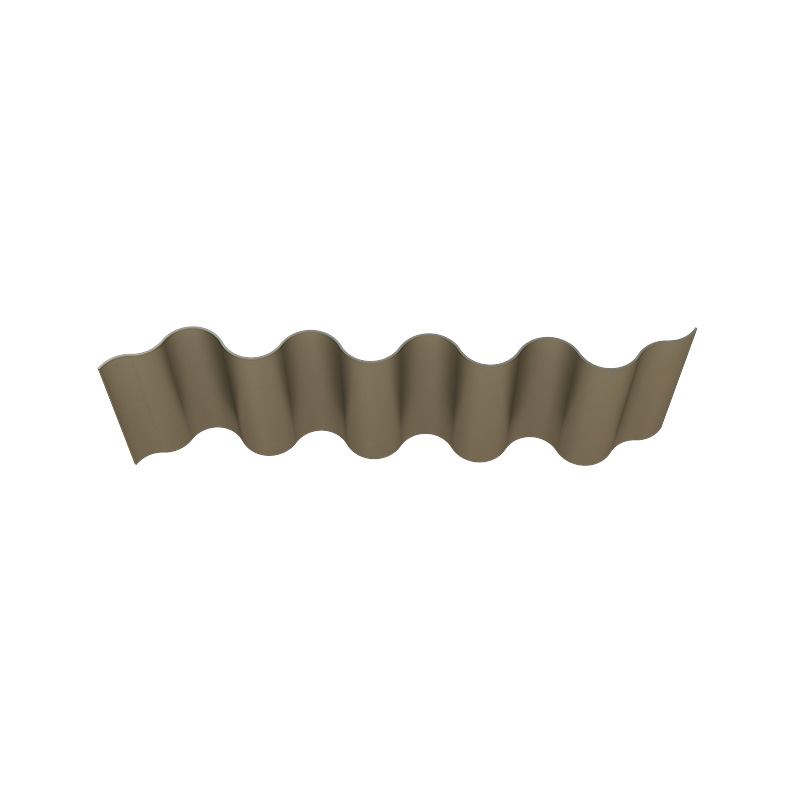 Rigid Mica Battery Cell Insulation PadRigid mica pad for cell-level thermal insulation, electrical isolation and structural support between battery cells in demanding assemblies.View Product →
Thicknesses commonly run from roughly 0.3 mm up to 2 mm. A thinner sheet gives you electrical separation with minimal stack height. A thicker, denser board adds structural behaviour and a longer thermal path. That trade-off is real, and it is worth testing both extremes on the same cell design before committing to a drawing.
The reason mica keeps turning up in cell-level protection is that it does not rely on a single property. It is the combination of thermal stability, dielectric strength and dimensional stability that happens to match what a cell stack needs.
Mica holds its structure at temperatures where polymer films soften and flow. It is inherently flame resistant rather than dependent on halogenated additives. It resists tracking and arcing under high voltage. And because it is mineral based, it does not creep or relax the way a foam does when it stays compressed for years.
| Property | Rigid mica pad | Silicone-based pad | Aerogel pad |
|---|---|---|---|
| Continuous temperature resistance | High | Moderate | High |
| Dielectric strength | High | Moderate | Moderate |
| Compression resistance | High | Low | Low |
| Typical thickness range | 0.3 to 2 mm | 1 to 5 mm | 1 to 4 mm |
| Primary role in the stack | Isolation and support | Cushioning and heat spreading | Thermal insulation |
Not every programme wants the same board, either. Some designs prefer a mica and glass fibre composite that adds mechanical toughness at a modest weight penalty, while others need the highest possible dielectric performance in the thinnest section the process can hold.
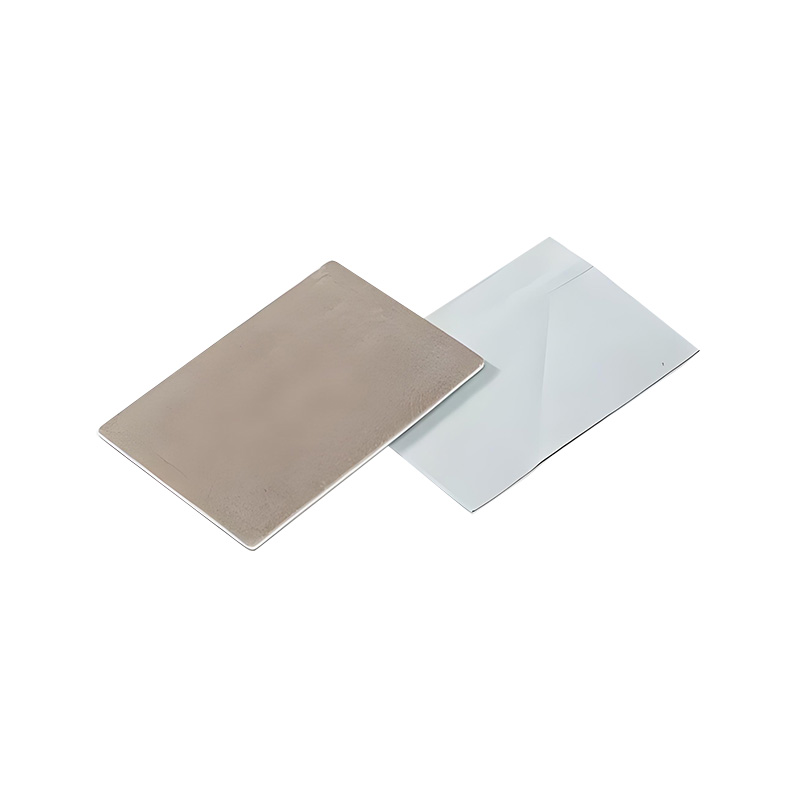 GM02 Mica and Fiberglass Battery Thermal PadMica-fiberglass thermal pad offering insulation, flame retardancy and mechanical cushioning between battery cells in high-temperature applications.View Product →
Data sheets are a starting point, not a decision. When design teams ask us what to compare, we usually steer them toward these points:
For the wider design context around these layers, our team also wrote a guide to EV battery thermal management that walks through the module and pack levels as well as the cell level.
The obvious position is between cells in a prismatic stack, but that is not the only place the material earns its keep:
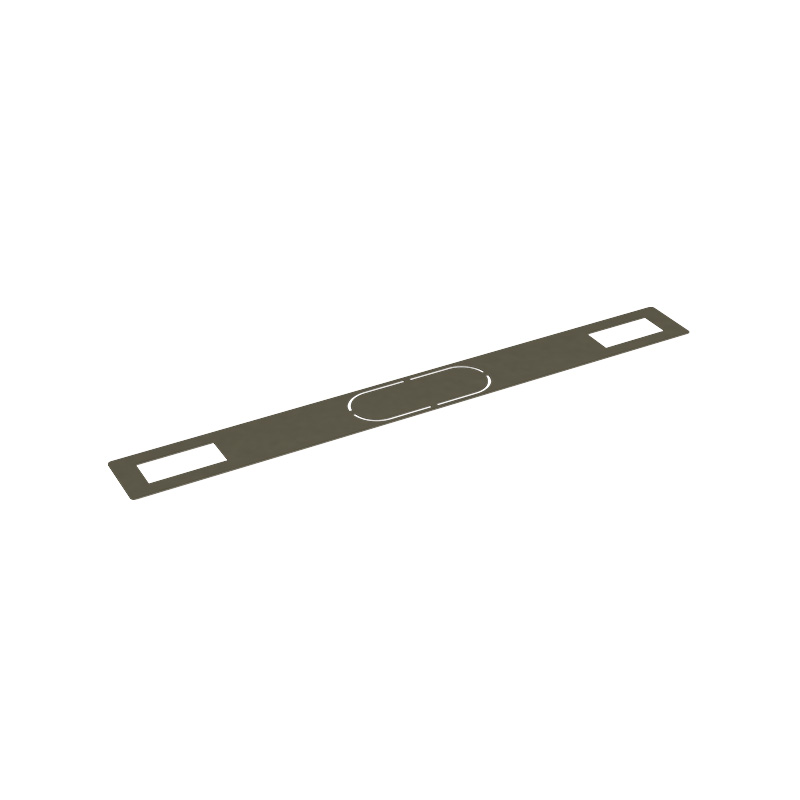 Thermex Battery Cell Protection ComponentsExplore cell-level thermal runaway protection range with prismatic covers, binder clips, rigid mica pads and heat-resistant thermal pad variants.View Product →
Because these positions place different demands on the part, most pack programmes end up using two or three variants from the same family rather than a single universal pad. If you want to see how cell-level parts sit inside the full hierarchy, our power battery protection solutions page covers the module and pack layers too.
They solve different problems. Aerogel is excellent at blocking conducted heat in a thin, porous format. Mica makes more sense where you also need electrical isolation, structural support, or resistance to compression cycling. Many packs use both, in different positions within the same module.
Prismatic cells expand as they cycle. A rigid mica board handles compression well, but it is not a substitute for a properly engineered compliant layer. Our usual recommendation is to test the pad in the assembled stack, not as a standalone coupon.
The relationship is not linear. Adding 0.5 mm between two cells changes the thermal resistance noticeably, but it also consumes stack space that is usually already contested by other components. Test it with the real stack, the real preload and the real duty cycle.
Mica is mined, so sourcing practice matters as much as performance. On the supply side, we take part in the Responsible Mica Initiative and the Responsible Minerals Initiative, which for many customers is now part of the qualification process rather than a footnote.
A cell-level insulation pad is a small part of a battery pack, and it rarely gets much attention in a design review. Yet it sits in the one place where electrical isolation, heat and mechanical load all meet at once. Getting that layer right, in thickness, density, edge quality and compression behaviour, is one of the more affordable forms of safety margin available to a pack engineer.
If you are working through a cell stack design and want a second opinion on material selection, our application team is happy to look at your drawings and test data. The conversation usually costs less than the prototype it saves.

 Applet
Call Center:
 Tel:+86-0512-63263955
 Email :[email protected]
Copyright © Goode EIS (Suzhou) Corp LTD
 Insulating Composite Materials and Parts for Clean Energy Industry


 cn
cn English