When you open a lithium-ion battery pack or a compact power module, you rarely see the foil that carries the current. Yet precision copper aluminum foil quietly determines how efficiently that current moves, how much heat builds up, and how long the system lasts. At Goode, we have worked alongside battery engineers, busbar designers, and power electronics teams for years. That experience has taught us one simple lesson: the foil is never just a commodity. It is a functional material that must match the application down to the micrometer.
In this article, we share what we have learned about precision copper aluminum foil, from its role in modern energy systems to the practical challenges of slitting, surface treatment, and composite design. Whether you are developing a new cell chemistry or refining an existing production line, these insights can help you make better material decisions.
Content
Copper and aluminum foils serve as the foundational current collectors in lithium-ion batteries and supercapacitors. Copper handles the negative electrode, while aluminum supports the positive side. When both metals are engineered into a single precision foil, manufacturers gain a unique combination of conductivity, weight reduction, and material efficiency. This is especially valuable in electric vehicles, where every gram affects range and every milliohm affects efficiency.
Standard industrial foils often vary in thickness, surface cleanliness, and mechanical strength. Those variations can lead to coating defects, uneven current distribution, and premature cell degradation. Precision copper aluminum foil, by contrast, is produced with tight tolerances and controlled surface topography. The result is a more predictable electrode coating process and a more stable electrochemical interface. For high-energy-density cells, that predictability is not a luxury. It is a requirement.
Beyond batteries, precision foils appear in busbars, combined charging systems, and radiator base plates. In each case, the foil must balance electrical performance with thermal management and mechanical reliability. We have seen projects succeed or stall based on whether the foil supplier understood this systems-level context. That is why we treat precision copper aluminum foil as an engineered component, not a raw material.
Every application has its own window of acceptable thickness, width, temper, and surface condition. The table below summarizes typical parameters for precision copper aluminum foil used in battery and power electronics manufacturing. These ranges are not universal prescriptions, but they reflect the specifications we most often discuss with customers.
| Property | Typical Range | Why It Matters |
|---|---|---|
| Thickness | 6 to 50 micrometers | Affects energy density, coating uniformity, and handling strength |
| Width | Up to 1,500 millimeters | Matches electrode coating and slitting lines |
| Tensile strength | 200 to 450 megapascals | Prevents tearing during high-speed winding |
| Electrical conductivity | Up to 100 percent IACS for copper | Reduces resistive heating and power loss |
| Surface roughness | 0.1 to 0.8 micrometers Ra | Controls adhesion of active materials and coatings |
These numbers only tell part of the story. The way a foil behaves on a coating line depends on how the material was rolled, annealed, and cleaned. A foil that meets a datasheet specification can still fail if its residual stress or surface chemistry is inconsistent. That is why we focus on process control from the first rolling pass to the final inspection.
Adhesion is one of the most common pain points in electrode manufacturing. Active materials, conductive carbons, and binders must bond reliably to the foil surface. If adhesion is weak, the coating can delaminate during winding, calendering, or cycling. To prevent this, precision copper aluminum foil receives carefully designed surface treatments. These may include electrochemical cleaning, chromate-free passivation, or thin conductive layers that improve wetting without adding excessive resistance.
We often remind customers that surface treatment is not a one-size-fits-all step. A treatment that works well for a water-based anode slurry may behave differently with a solvent-based cathode slurry. The key is to match the treatment chemistry to the binder system, the coating speed, and the drying profile. When these elements align, the foil becomes an invisible enabler of high-yield production.
Even the best foil can be ruined by poor slitting. Precision copper aluminum foil is thin, ductile, and sensitive to tension. If the slitting line applies too much tension, the foil can stretch or wrinkle. Too little tension, and the web may wander, causing edge burrs and coating defects. The window between these extremes is narrow, especially as foil thickness decreases.
Burr control is another critical factor. A burr that seems microscopic can puncture a separator or create a short circuit in a finished cell. We have helped customers audit their slitting equipment, adjust blade angles, and optimize rewind tension to minimize burr height. In many cases, the solution is not a new material but a better understanding of how the material behaves at speed.
Handling and storage also matter. Copper aluminum foil can oxidize or absorb moisture if it is exposed to humid air for too long. Cleanroom packaging, controlled atmosphere storage, and just-in-time delivery help preserve surface quality. These logistics may seem secondary, but they directly affect yield and scrap rates. For a material that is measured in micrometers, every detail counts.
In electric vehicle battery packs, precision copper aluminum foil supports several critical functions. It acts as the current collector in cells, the conductive path in busbars, and the thermal interface in certain cooling assemblies. The same material can also appear in combined charging systems, where compactness and heat dissipation are essential.
We have seen strong demand for copper aluminum composite foils that reduce weight without sacrificing conductivity. By replacing part of the copper with aluminum, designers can lower cost and mass while maintaining acceptable electrical performance. This trade-off is particularly attractive in busbars and battery negative terminals, where space and weight are tightly constrained.
 Precision Copper Aluminum FoilThis Precision Copper Aluminum material plays a critical role in the manufacturing of high-performance power batteries, serving as a key material in electrode assembli...View Product →
For teams working on thermal runaway protection, the foil often pairs with mica sheets, aerogel pads, and ceramic insulation components. Together, these materials form a layered defense that slows heat propagation and protects neighboring cells. You can explore related thermal management strategies in our technical library.
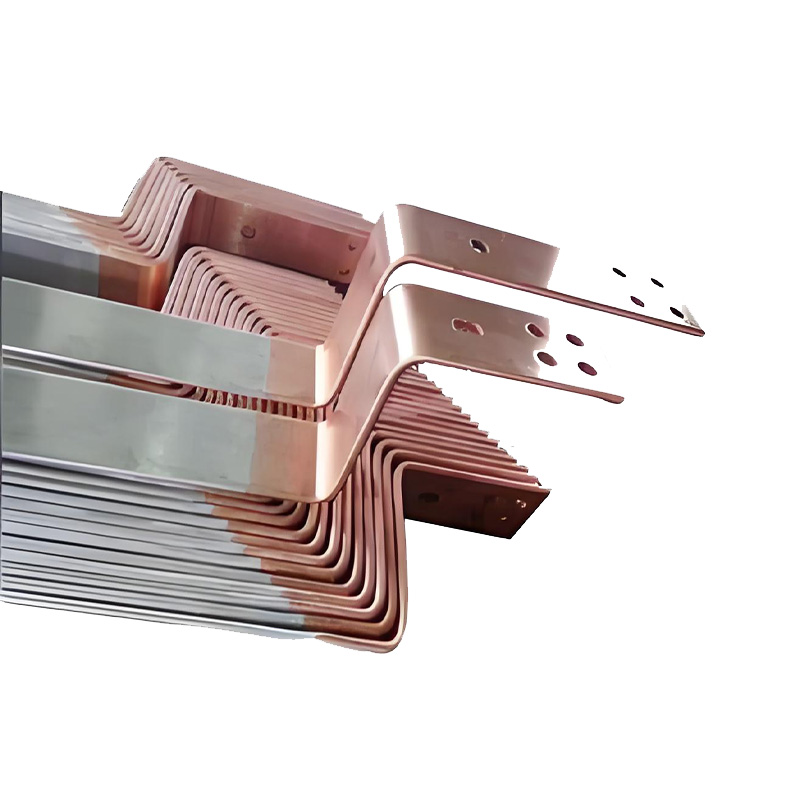 BusbarThis high-performance busbar is precisely manufactured from high-purity copper, offering excellent electrical conductivity and mechanical strength. Through optimized s...View Product →
Power electronics represent another growing application. In inverters, DC-DC converters, and on-board chargers, copper aluminum foil helps manage high-frequency currents with lower resistive losses. The foil's surface quality and dimensional stability directly influence the reliability of soldered or welded joints. As power densities rise, these details become even more important.
The next generation of energy systems will demand foils that are thinner, stronger, and more functionally integrated. We are already seeing interest in ultra-thin copper aluminum foils below ten micrometers, driven by the push for higher energy density and faster charging. At the same time, composite structures that combine copper, aluminum, and other functional layers are opening new design possibilities.
One promising direction is the use of precision copper aluminum foil in solid-state batteries. These cells require current collectors that can withstand higher temperatures and mechanical pressures. The foil must also maintain intimate contact with solid electrolytes, which places new demands on surface flatness and chemistry. While solid-state technology is still maturing, material suppliers who understand these requirements will be well positioned to support the transition.
 Cu-Al Composite Materials and Products SuppliersPrecision Copper Aluminum FoilView Product →
Another trend is sustainability. Manufacturers are increasingly asking for foils with recycled content, reduced process waste, and transparent supply chains. At Goode, we participate in responsible sourcing initiatives and work with partners to improve material efficiency. Lightweight copper aluminum composites can help reduce the overall carbon footprint of a battery pack, especially when they replace heavier pure-copper components.
We also expect greater integration between foil design and battery management systems. As sensors become more common in cells and modules, the current collector may need to carry not only current but also signals. This convergence will require closer collaboration between material engineers, electrical designers, and software teams. Precision foil will be part of that conversation.
Precision copper aluminum foil may not be the most visible part of a battery or power module, but it is one of the most influential. Its thickness, surface, and mechanical behavior touch nearly every stage of manufacturing, from coating and slitting to winding and cycling. By treating foil as an engineered material rather than a commodity, teams can improve yield, extend product life, and unlock new design possibilities.
At Goode, we are proud to support customers across the energy transition with advanced copper aluminum composite materials. If you are evaluating foil specifications for your next project, we welcome the opportunity to share our experience and help you find the right balance of performance, weight, and cost. Please reach out to our technical team whenever you are ready to discuss your application.

 Applet
Call Center:
 Tel:+86-0512-63263955
 Email :[email protected]
Copyright © Goode EIS (Suzhou) Corp LTD
 Insulating Composite Materials and Parts for Clean Energy Industry


 cn
cn English