Content
Single-sided copper-aluminum transition material is a specialized bimetallic component designed to create a reliable, low-resistance electrical bridge between copper and aluminum conductors. Unlike double-sided clad sheets, this transition joint features copper bonded to aluminum on only one face, making it ideal for end-to-end connections in busbars, cable lugs, and power distribution terminals. The copper side accepts standard copper crimping tools and soldering techniques, while the aluminum side integrates seamlessly with lightweight aluminum bus systems. This single-sided copper-aluminum transition plate eliminates galvanic corrosion risks and thermal cycling failures that plague direct copper-to-aluminum bolted joints, providing a metallurgically fused interface that maintains stable conductivity over decades of operation.
The core value of this Al-Cu bimetal connector lies in its ability to solve a persistent engineering dilemma: how to leverage aluminum's weight and cost advantages without sacrificing copper's superior conductivity at connection points. In solar inverter cabinets, for example, aluminum busbars reduce overall system weight by forty percent, but connecting them directly to copper inverter terminals causes rapid oxidation and resistance buildup. By inserting a copper-aluminum transition interface between the two metals, engineers create a permanent, maintenance-free junction that handles high current loads without hotspots. The bonded interface is created through explosive welding or friction stir processing, ensuring atomic-level diffusion that won't separate under mechanical vibration or thermal expansion.
Producing a dependable single-sided copper-aluminum transition material requires precise control over surface activation, bonding pressure, and post-process heat treatment. The most common method uses explosive welding, where a controlled detonation forces the copper and aluminum surfaces together at supersonic speed, creating a wavy metallurgical bond with exceptional shear strength. Alternative techniques like friction stir welding or roll bonding offer tighter thickness tolerances for precision applications. Regardless of the method, quality manufacturers perform ultrasonic testing to verify bond continuity and cross-sectional microscopy to confirm the absence of brittle intermetallic compounds like Al2Cu or Al4Cu9, which can crack under thermal stress. Always request a material certification that includes peel strength data, electrical resistance measurements, and corrosion resistance ratings before approving a supplier.
| Test Parameter | Minimum Acceptable Value | Test Method | Why It Matters |
| Bond Shear Strength | ≥ 70 MPa | ASTM B898 | Prevents delamination during thermal cycling |
| Electrical Resistance | ≤ 1.2x base metal | Four-point probe | Ensures no power loss at the transition |
| Intermetallic Layer Thickness | < 5 μm | SEM cross-section | Avoids brittle fracture under vibration |
| Salt Spray Resistance | ≥ 500 hours | ASTM B117 | Guarantees longevity in humid environments |
When reviewing these specifications, pay special attention to the intermetallic layer thickness. A well-controlled bonding process keeps this brittle zone under five micrometers, ensuring the copper-aluminum transition busbar remains ductile enough to withstand installation torque and operational vibration without cracking.
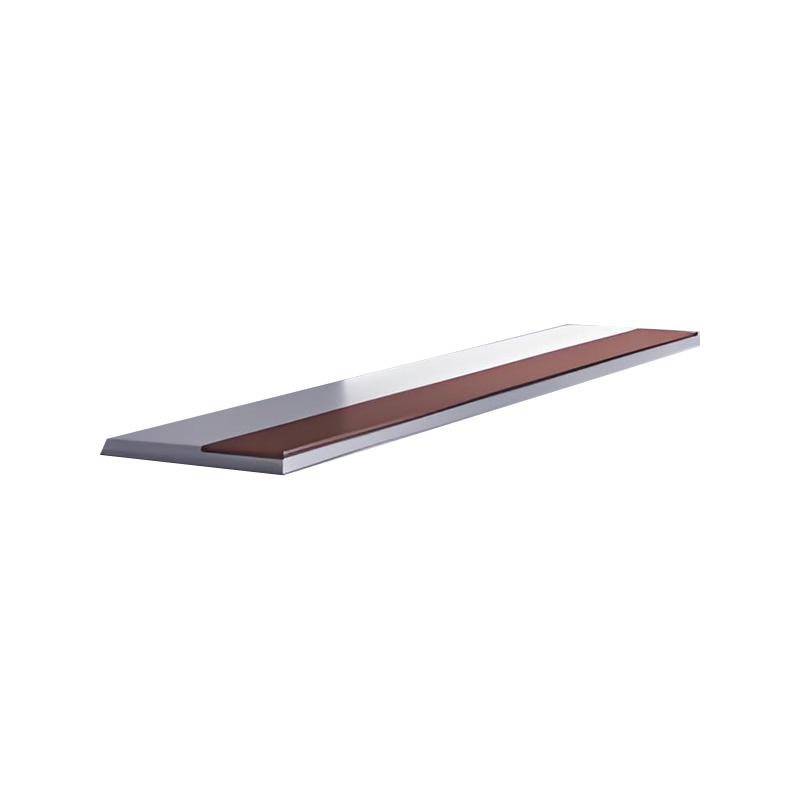
Renewable energy installations heavily rely on single-sided copper-aluminum transition material to connect aluminum PV array wiring to copper inverter inputs. The transition joint handles the high DC currents typical in solar farms while resisting corrosion from outdoor exposure. Because the aluminum side matches the coefficient of thermal expansion of the PV module frames, mechanical stress during daily temperature swings is minimized, reducing the risk of connection fatigue. Similarly, in electric vehicle battery packs, these Al-Cu bimetal connectors link lightweight aluminum busbars to copper motor terminals, enabling high-power discharge cycles without overheating at the junction point. The single-sided design simplifies inventory management since one component serves both conductor types.
One frequent mistake when specifying single-sided copper-aluminum transition material is ignoring the current density requirements at the transition zone. Because the copper layer is thinner than a solid copper busbar, exceeding its ampacity rating causes localized heating that accelerates intermetallic growth and eventual failure. Always calculate the effective cross-sectional area of the copper face and derate accordingly for continuous loads above eighty percent of capacity. Another oversight is failing to protect cut edges; when trimming the transition plate to size, the exposed aluminum-copper boundary becomes a galvanic cell in humid conditions. Seal all cut edges with a conductive epoxy or nickel plating to prevent edge corrosion from migrating inward.

 Applet
Call Center:
 Tel:+86-0512-63263955
 Email :[email protected]
Copyright © Goode EIS (Suzhou) Corp LTD
 Insulating Composite Materials and Parts for Clean Energy Industry


 cn
cn English