Thermal pads are the quiet problem-solvers of an EV battery pack. They sit between cells, modules, cooling plates and enclosures, where they manage heat, absorb tolerances and help keep high-voltage parts isolated. A pad that is too hard, too soft, too conductive or too insulating can create as many problems as it solves.
At Goode, the useful question is not "Which pad has the highest conductivity?" but "What is this interface actually being asked to do?" This guide covers where pads go, what they are made from, and how to compare candidates before a pack-level test.
Content
An EV battery thermal pad is usually an engineered interface material, not a simple sheet of rubber. In a conductive role, it bridges microscopic air gaps between a cell or module and a liquid cooling plate. Air is a poor heat path, so the pad lowers thermal impedance and helps spread heat more evenly. That homogenization matters: a pack with a few hot cells can age faster than one with a moderate, even temperature profile.
But "thermal pad" is an umbrella term. Some pads move heat; others stop it. Aerogel composites, mica laminates and certain foams act as thermal barriers, helping delay heat spread from a failing cell. Many pads also provide dielectric strength, compression, vibration damping and flame resistance. A good specification separates these jobs so the material is not asked to excel at all of them at once.
At cell level, pads often sit between prismatic cells, under cell bottoms or around cell covers. The design may need dielectric isolation, compression management and, in some locations, thermal isolation. In our Thermex range, the GA100 battery thermal pad combines PU foam, aerogel and PET film into a compressible insulating barrier. Its value comes from protection and tolerance absorption, not high thermal conductivity.
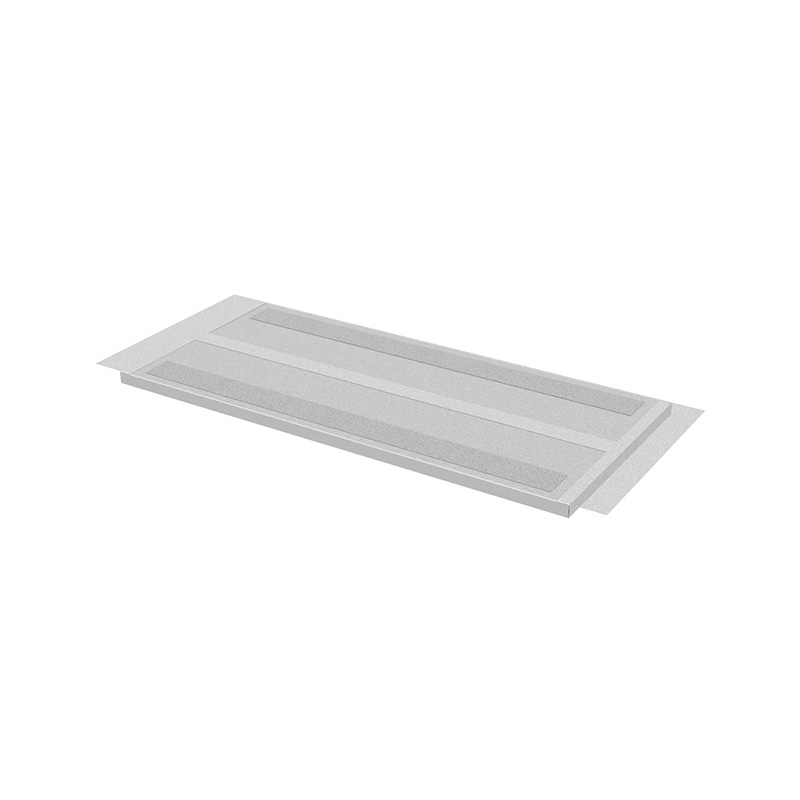 GA100 Battery Thermal Pad for Cell ProtectionA compressible PU foam, aerogel and PET insulating pad that absorbs tolerances and cushions cells, with flame-retardant protection for battery assemblies.View Product →
Mica-based constructions serve a different need. The GM02 battery thermal pad uses mica and glass fiber to provide a rigid, high-temperature-resistant dielectric barrier. It is less conformal than a silicone gap pad, but that stiffness can be useful where the pack needs a defined insulating wall.
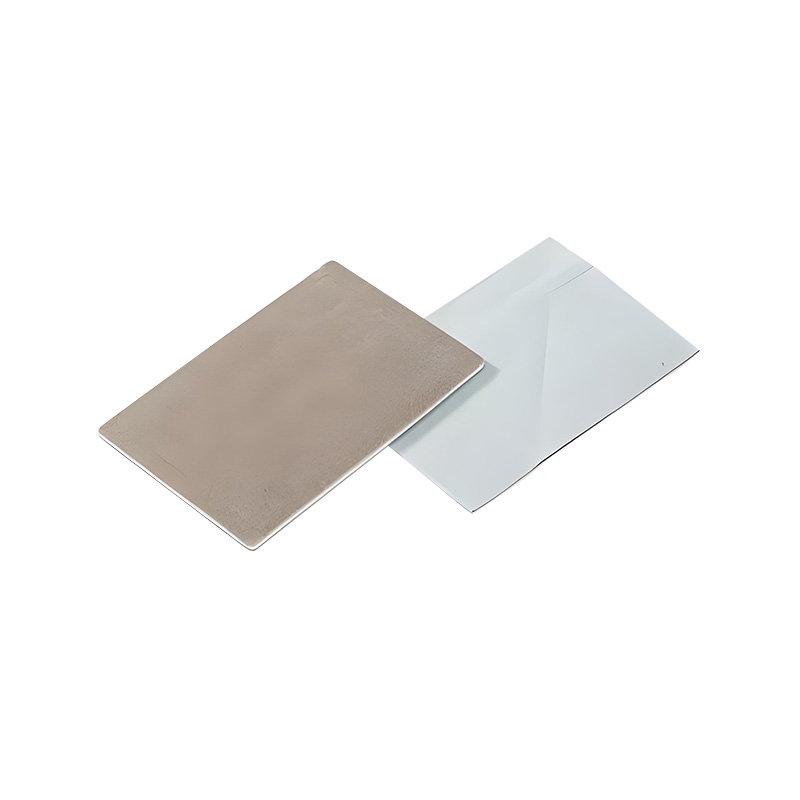 GM02 Mica Fiberglass Battery Thermal PadA rigid, flame-retardant mica and fiberglass barrier for high-temperature electrical isolation and thermal insulation in power battery packs.View Product →
At module level, pads and related parts appear around end plates, release plates and module covers. Here the pad may accommodate cell swelling, maintain compression, or protect a surface from heat and electrical contact. The mechanical question is often as important as the thermal one: how much compression does the pad need, and how much rebound will it retain after cycling?
At pack level, the most familiar location is the interface between the cell array and the cooling plate. This is where thermal interface pads earn their keep, because a consistent, thin bond line can reduce thermal resistance without a dispensing process. Other pack-level pads protect busbars, BMS boards, connectors, housing sidewalls and top covers. Top-cover fireproofing is not there to cool the pack; it limits the consequences of a fault.
Silicone gap pads are the default for many cooling-plate interfaces. They are soft, dielectric and available in a range of thicknesses and conductivities. They can be die-cut, assembled without curing and inspected visually. The trade-offs are compression set, cost and compliance. A pad that is too thick may put unnecessary force on cells; one that is too thin may not wet out the surfaces.
PU foam and aerogel composites are usually selected for insulation, cushioning and fire protection. They are lightweight and can be built into multilayer structures with films or facings. Their thermal conductivity is intentionally low, so they should not be specified as heat-transfer pads. The question is whether the barrier survives compression, vibration and aging.
Mica and glass fiber laminates bring high-temperature resistance, dielectric strength and dimensional stability. They suit cell isolation, flame barriers and areas where a soft pad would be too compliant. The trade-off is conformability: a rigid mica part will not fill a rough interface, so surface flatness and cut-edge quality need attention.
Phase change material pads add a passive thermal buffer. They absorb heat during short peak loads and release it later, smoothing temperature spikes. They are not a substitute for a cooling path, and their cycle stability, containment and mechanical role need validation. Treat them as a targeted addition, not a universal upgrade.
Thermal conductivity is a headline number, but it is not a specification. What matters is thermal impedance under installed pressure, with the real surface finish and gap. The table below compares common constructions at a practical level.
| Construction | Typical role | What to verify |
|---|---|---|
| Silicone gap pad | Heat transfer to cooling plate; electrical isolation | Thermal impedance at working compression; compression set; dielectric strength |
| PU foam or aerogel composite | Thermal barrier; cushioning; cell protection | Compression force; rebound; insulation performance; flammability |
| Mica and glass fiber laminate | Rigid cell insulation; flame barrier; high-temperature zone | Dielectric breakdown; brittleness; cut-edge quality |
| Phase change material pad | Passive thermal buffering during peak loads | Latent heat; cycle stability; containment |
Use this as a screening tool, not a final answer. A pack-level test with actual compression, coolant temperature and duty cycle will reveal more than a data sheet.
Pre-cut pads and liquid gap fillers both replace air with a better heat path. Pads offer consistent thickness, clean assembly and easy inspection. They work well on flat, defined interfaces and are friendly to rework. Dispensable gap fillers conform to irregular gaps and can be automated, but they add curing, pumpability and contamination considerations.
The choice usually comes down to gap tolerance and volume. If the gap is controlled and the interface is flat, a pad is often simpler. If the gap varies across the pack, a dispensed material may be more forgiving. Some designs use both: a pad for the main cooling interface and a dispensable material for a complex corner. The right answer is the one that can be repeated in production.
We use a short checklist when reviewing a pad for an EV battery application. It keeps the conversation grounded.
Goode's experience sits on both sides of this interface. Our Thermex range covers cell, module and pack protection, and we also produce mica parts, insulation components and copper-aluminum composites for battery connections. That mix matters because a thermal pad is rarely specified in isolation; it has to fit the surrounding insulation, busbar and housing design. Our factories in Mexico, Binzhou and Luhe support regional delivery, and our sustainability programs reflect the supply-chain expectations that come with battery materials.
We would rather start with your gap tolerance and duty cycle than with a conductivity number. If you want a deeper walkthrough, our guide to EV battery thermal pads covers the architecture and material trade-offs in more detail.
The best EV battery thermal pad is not the one with the highest datasheet value. It is the one that manages the real interface: the right compression, the right dielectric margin, the right thermal path and the right behavior after aging. Get those basics right, and the pad becomes what it should be — a quiet, reliable part of a safer battery pack.

 Applet
Call Center:
 Tel:+86-0512-63263955
 Email :[email protected]
Copyright © Goode EIS (Suzhou) Corp LTD
 Insulating Composite Materials and Parts for Clean Energy Industry


 cn
 English