Every piece of electrical hardware we depend on is defined as much by what current cannot pass through as by what it can. Electronic insulating components are the quiet half of that equation: the resin cast around a transformer winding, the mica pad separating two battery cells, the paper wrapped around a generator bar, the thin coating that keeps moisture off a control board. When they do their job, nobody notices. When they do not, the failure is usually hot, loud and expensive.
This guide walks through what these components are asked to do, which material families are most often specified, and how the choice plays out in real applications such as electric vehicles, wind and hydro generation, grid equipment and medical imaging.
Content
It is tempting to think of insulation as a passive barrier. In practice a component often has to satisfy four or five requirements at once, and the design usually involves trade-offs between them. A material with excellent dielectric strength may be brittle; a flexible one may creep under heat; a thermally conductive one may be harder to process.
The practical definition of a good insulator is therefore not one number on a datasheet, but whether the part still behaves predictably after years of thermal cycles, humidity and mechanical load.
Most electrical designs draw from a fairly small set of material families. Knowing how they behave, and in what physical form they arrive, makes specification conversations much shorter.
| Material family | Typical form | Common applications | What it is chosen for |
|---|---|---|---|
| Epoxy casting and impregnating resins | Two-part liquid, vacuum cast or VPI | Transformers, bushings, switchgear poles, motor stators, MRI coils | Void-free dielectric strength with mechanical rigidity |
| Mica composites | Rigid sheet, flexible laminate, formed pads | Battery cell insulation, thermal barriers, fire protection | High temperature resistance plus reliable dielectric behaviour |
| Insulation paper and board | Sheet, crepe, wrapped tape | Generator slots, coil wrapping, layer insulation | Thin, conformable, easy to process and repair |
| Ceramic components | Sintered or machined parts | High temperature generators, harsh environment assemblies | Stability where polymers would degrade |
| Conformal coatings | Spray, dip or brush | Circuit boards, generator windings | Moisture and contamination protection on irregular surfaces |
Form matters as much as chemistry. A rigid laminated sheet suits a punched slot liner, while the same polymer as a liquid suits a cast bushing. Selecting the right form early avoids a redesign later.
In a lithium-ion pack, insulation and heat management are entangled. Mica pads and thermal barriers sit between adjacent cells, module covers and release plates direct vented gas and debris away from healthy cells, and pack-level components shield busbars, connectors and control electronics. Each part is small; together they decide how much time the occupants of a vehicle have if a cell goes into thermal runaway. You can explore the full layer-by-layer approach in our
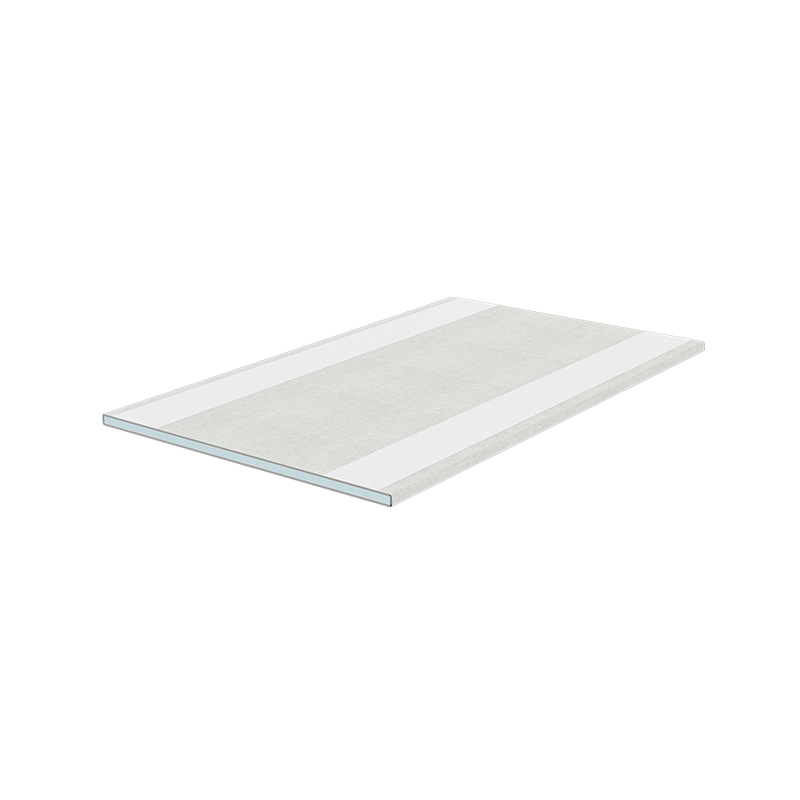 EV Power Battery Thermal Runaway Protection ComponentsExplore thermal barriers, pressure relief and fire-retardant components designed to isolate thermal events and protect neighboring cells in EV battery packs.View Product →
.
Rotating machines are a demanding environment: high voltage, constant vibration and decades of expected life. VPI impregnation systems, slot components, insulation paper and protective coatings have to work as a system, because a single void in the wrong place becomes a partial discharge site. Clean energy generation has raised the stakes further, with larger machines and longer service intervals offshore. Our
 Power Generation Equipment Insulating ComponentsView VPI resins, mica tapes, slot insulation and protective parts for generator winding insulation in thermal, hydro and wind power assets.View Product →
shows the component set usually involved.
Medium and high voltage equipment relies on cast resin not only for insulation but for mechanical structure and environmental sealing. The same casting has to release from the mould cleanly, cure without internal stress and hold its shape through years of load cycling. Detailed material options are listed under
 UHV Transmission and Distribution Insulating ResinsReview high-performance epoxy resins for resin-impregnated paper dry-type bushings and UHV applications, including transformer, casing and high-voltage casing casting resins.View Product →
.
MR scanners are an unusual case. The insulation is asked for excellent dielectric behaviour, but low magnetic signature and very tight dimensional tolerance matter just as much, because a gradient coil assembly cannot afford distortion. Casting resins and insulation papers for cold screens, gradient coils and magnet coils have become a specialised field of their own.
Most selection mistakes are made early, before any sample is tested. We have found it useful to settle these points first.
Answering these in a single table before contacting any supplier usually shortens the development cycle considerably.
Insulation components are rarely bought as commodities. They are engineered parts, and the supplier's process control is part of the product. At Goode we work across two business units, one focused on battery thermal runaway protection and lightweight conductive composites, the other on insulation resins and structural insulation parts for generation, distribution and medical equipment. That split matters in practice, because a battery pad and a bushing casting demand very different manufacturing disciplines.
Our production footprint spans Suzhou as well as sites in Binzhou, Luhe and Mexico, which helps when customers need regional supply. More background on how the company is organised is available in our company profile, and specific locations are listed under plant information. Alongside manufacturing, we participate in responsible sourcing programmes for mica and minerals, since insulation supply chains are increasingly audited on traceability as well as performance.
Electronic insulating components rarely attract attention in a product launch, yet they carry much of the safety case for a battery pack, a transformer or an MRI magnet. The practical lesson is simple: define the electrical, thermal and mechanical duty together, choose a material form that suits your process, and involve the manufacturer while the design is still flexible. Do that, and the insulation stays boring, which is exactly what everyone wants it to be.

 Applet
Call Center:
 Tel:+86-0512-63263955
 Email :[email protected]
Copyright © Goode EIS (Suzhou) Corp LTD
 Insulating Composite Materials and Parts for Clean Energy Industry


 cn
 English