Electrical components are usually described one part at a time: a resistor here, a contactor there, a bushing between them. That works well on a schematic, but it leaves out the materials that hold the system together — the resins, insulation papers, mica sheets and composite plates that sit between live parts and everything around them. Goode has spent years manufacturing exactly that layer, so the pages below walk through the familiar component families first, then look at the insulation and protection parts that quietly decide whether a design survives twenty years in the field.
Content
Ask ten engineers what an electrical component is and you will get ten lists. A circuit board designer counts resistors, capacitors and transistors. A substation engineer counts bushings, surge arresters, disconnectors and busbars. A battery pack engineer counts thermal pads, mica insulation plates and busbar protection sleeves. All of them are right; the word simply scales with the system being discussed.
| Family | Typical examples | What it does in a system |
|---|---|---|
| Passive components | Resistors, capacitors, inductors, filters | Store, shape or limit electrical energy without external control |
| Active components | Diodes, transistors, MOSFETs, IGBTs, integrated circuits | Switch, amplify or convert signals and power |
| Electromechanical parts | Contactors, relays, switches, connectors, fuse holders | Make, break and route current on command |
| Sensing and control | Thermistors, current sensors, battery management boards | Measure conditions and trigger protective action |
| Insulation and structural parts | Casting resins, insulation paper, mica pads, copper-aluminium composites | Separate, support, conduct heat and hold geometry over the service life |
The last row is the one most introductory guides skip, yet in high-voltage equipment it carries as much engineering weight as any device on the other rows.
Before looking at insulation, it helps to fix the vocabulary. Almost every circuit, whether it lives on a printed board or inside a switchgear cabinet, contains some version of the following:
Those components are well documented. The material layer underneath them usually is not.
Every conductor in a piece of electrical equipment is surrounded by something that keeps its voltage where it belongs. In a generator, that something may be a vacuum-pressure-impregnated epoxy system binding the stator winding together. In a dry-type transformer it may be a casting resin that also carries mechanical load and conducts heat out of the coil. In a motor it may be a conformal coating protecting magnet wire from moisture and contamination.
Engineers judge these materials on properties that rarely appear in consumer-facing descriptions: dielectric strength, dissipation factor, thermal class, tracking resistance, partial discharge behaviour and adhesion after thermal cycling. A resin that looks identical to another on a datasheet can behave very differently after a thousand hours at temperature, which is why the processing window and the curing profile matter as much as the formulation.
Goode supplies this layer in several forms, including insulation papers, insulation structural components, high-temperature ceramic insulation parts and impregnating systems for rotating machines.
 VPI Impregnated Epoxy Resin for Large GeneratorsFor large generator windings, this VPI epoxy system penetrates coils to reduce voids and support dielectric, moisture and thermal stability under demanding operation.View Product →
Medium-voltage switchgear and dry-type transformers have largely moved away from oil and toward cast solid insulation, for reasons of fire safety, footprint and maintenance. That shift put casting resins at the centre of equipment design. An embedded pole, for instance, is essentially a resin body that has to hold an interruptor rigidly, resist surface tracking and release heat — all at once.
The same logic extends upward in voltage. At transmission level, dry-type transformer resins and high-voltage casing casting resins must survive field strengths that would break down ordinary polymers, and they must do so for decades without measurable loss of mechanical integrity. Downstream, resin choice affects how easily a factory can cast a part, how long the cycle takes and how many units pass routine partial discharge testing.
For teams specifying materials rather than parts, the practical questions are usually about compatibility: does the resin bond to the insert, does it cure fully at the temperature the process allows, and does the supplier keep the same formulation from batch to batch.
 High Voltage Casing Casting Resin for Insulation ComponentsFor high-voltage insulation components, this casting resin is formulated for adhesion, low shrinkage and dielectric strength, supporting compact, defect-free cast structures.View Product →
Electric vehicles added a new family to the electrical component list: passive parts whose job is to slow down heat rather than carry current. A lithium-ion pack is designed so that a failure in one cell does not cascade into the whole pack, and that design depends on materials placed between cells, around modules and under the enclosure.
At cell level, rigid mica insulation pads and thermal pads isolate neighbouring cells and delay heat transfer. At module level, end plates, covers and release plates direct the release of gas and pressure in a controlled way. At pack level, top-cover fireproofing, housing protection, busbar sleeves and cooling plate interfaces finish the job. Copper-aluminium composites join the list as well, because they let a busbar or a battery terminal keep copper where conductivity matters and aluminium where weight does.
These parts are simple to describe and difficult to qualify, since they must pass thermal, electrical, mechanical and aging tests at the same time.
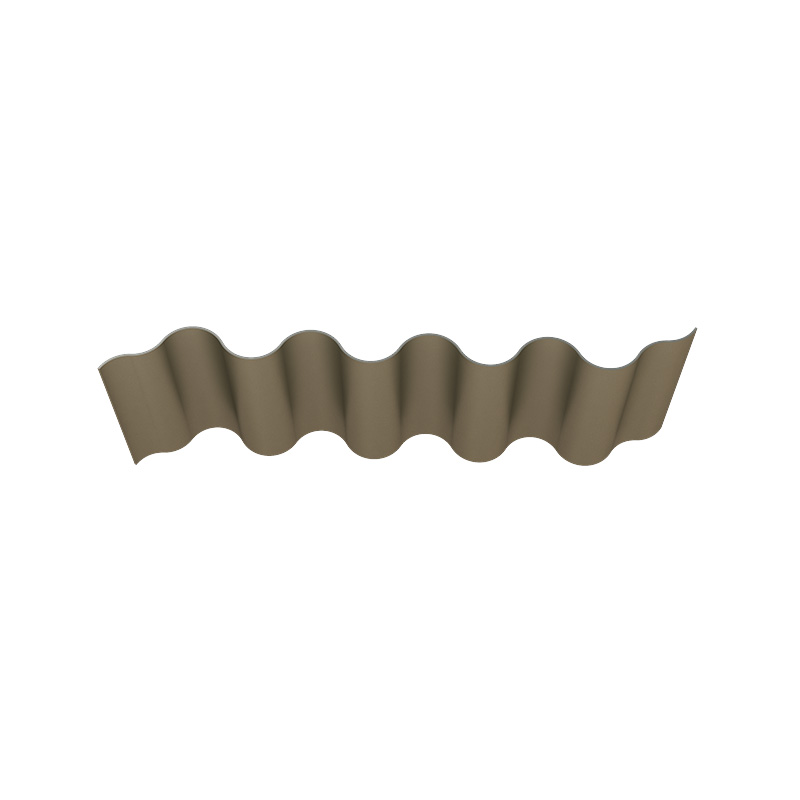 Rigid Mica Battery Cell Insulation PadView Product →
Whether the part in question is a casting resin, an insulation paper or a thermal barrier, the evaluation follows a similar path. A short checklist helps keep the conversation productive:
None of these steps is exotic, but together they separate a material vendor from a development partner.
Goode, formally Goode EIS (Suzhou) Corp LTD, works on both sides of the component list described above. The automotive business unit handles thermal runaway protection, lightweighting and copper-aluminium composites for battery and vehicle applications, while the electrical business unit covers insulation resins, papers and structural parts for power generation, distribution, transmission and medical imaging equipment. Manufacturing is spread across sites in Suzhou, Binzhou, Luhe and Mexico, and the company profile sets out the background in more detail.
If you are weighing material options for a new design, the fastest route is usually a short technical conversation about operating conditions, process constraints and test requirements. You are welcome to talk to our engineers and start from there.

 Applet
Call Center:
 Tel:+86-0512-63263955
 Email :[email protected]
Copyright © Goode EIS (Suzhou) Corp LTD
 Insulating Composite Materials and Parts for Clean Energy Industry


 cn
 English