Content
A cylindrical release plate is a precision-machined circular or ring-shaped mechanical component used in clutch assemblies, brake systems, magnetic holding devices, and various power-transmission mechanisms to engage or disengage the transfer of force between rotating or stationary members. The "release" function refers to the plate's role in separating two contact surfaces — typically a friction disc, magnetic face, or pressure surface — when a disengagement command is applied, whether mechanically, hydraulically, pneumatically, or electromagnetically. The cylindrical geometry describes the plate's form: a disc or ring of uniform cross-section whose flat faces are machined to tight tolerances to ensure uniform contact, parallel engagement, and consistent force distribution across the entire contact area.
In practical terms, a cylindrical release plate serves as an intermediary interface component that translates an axial force — applied by a lever mechanism, hydraulic piston, pneumatic actuator, or electromagnetic coil — into a controlled separation or engagement of the primary friction or contact surfaces in the assembly. Its geometry, material, surface finish, flatness tolerance, and stiffness collectively determine how uniformly the disengagement force is distributed, how quickly and cleanly the separation occurs, and how reliably the assembly re-engages when the release force is removed. In high-performance applications, even small deviations from the specified flatness or parallelism of a cylindrical release plate can cause partial contact, uneven wear, thermal hot spots, and premature component failure in the broader assembly.
Cylindrical release plates appear across a wide range of mechanical and electromechanical systems wherever a flat, rigid, axially-loaded interface is required to control engagement and disengagement. Understanding the breadth of applications helps clarify the range of performance requirements — and why the same basic geometric form can be specified in very different materials and to very different precision grades depending on the use case.
In electromagnetic clutch systems — widely used in industrial machinery, printing equipment, conveyor drives, packaging machinery, and HVAC compressors — the cylindrical release plate (often called the armature plate or rotor face plate in this context) is the component attracted by the magnetic flux generated by the clutch coil when energized. It is machined to precise flatness and surface finish so that, when drawn against the electromagnet rotor face, it makes full, even contact across its entire annular surface, maximizing torque transmission. When the coil is de-energized, leaf springs or wave springs integrated into the release plate assembly pull the plate away from the rotor face, cleanly breaking the magnetic circuit and releasing the driven shaft. The spring return force must be carefully calibrated — too weak and the plate drags against the rotor face during release, causing heat and wear; too strong and the plate's engagement speed is too slow for the application's required response time.
In dry disc friction clutches — used in automotive transmissions, agricultural machinery, industrial power transmission, and machine tool spindle drives — the cylindrical release plate works in conjunction with the pressure plate and flywheel to sandwich the friction disc. When the clutch pedal is depressed (or a release fork is actuated), the release bearing applies an axial load to the cylindrical release plate (or directly to the diaphragm spring fingers that serve as a release mechanism in modern automotive clutches), relieving the clamping force on the friction disc and allowing the engine or driving shaft to spin freely from the gearbox or driven component. The flatness, parallelism, and surface condition of the release plate contact surfaces directly affect how smoothly and completely the friction disc disengages, which determines shift quality, clutch pedal feel, and clutch assembly longevity.
Multi-disc hydraulic brakes and pneumatic brakes used in industrial machinery, hoisting equipment, wind turbine pitch and yaw drives, and precision machine tools incorporate cylindrical release plates as structural elements of the disc stack. In spring-applied, hydraulically-released (fail-safe) brakes, a stack of alternating friction discs and steel separator plates is compressed by powerful disc springs to apply braking torque. When hydraulic or pneumatic pressure is applied to the brake cylinder, a cylindrical release plate — acting as the piston face or pressure-distributing element — overcomes the spring force, separates the disc stack, and releases the brake. The uniformity of force distribution by the cylindrical release plate across the full disc stack area is critical: uneven distribution causes some discs to remain in partial contact while others are fully separated, resulting in drag, uneven wear, and reduced brake release completeness.
Permanent magnet chucks, electromagnetic workholding fixtures, and magnetic coupling devices used in machining, material handling, and assembly automation use cylindrical release plates as the releasable contact interface. In permanent magnet holders, the cylindrical release plate is a magnetically soft steel disc that sits against the magnet pole face. When the device is switched from the hold state to the release state — either by reversing the magnetic circuit or by applying an opposing electromagnetic flux — the plate is detached, releasing the workpiece or coupled component. The surface finish and flatness of the cylindrical release plate determine both the holding force achieved (rough or non-flat surfaces reduce effective pole contact area, reducing holding force) and the cleanliness of release (a warped or non-flat plate can cause residual contact with the magnet face after the release command, causing delayed or partial release).
The physical construction of a cylindrical release plate reflects the functional demands of its application — the loads it must transmit, the precision of engagement required, the operating environment, and the mating components it interfaces with. While basic geometry is simple (a flat disc or annular ring), the precision to which that geometry must be maintained, and the features incorporated into the plate, are highly application-specific.
The outer diameter (OD) of a cylindrical release plate defines the maximum contact or engagement area and must be matched to the mating component — rotor face, friction disc, or magnet pole face — within the specified dimensional tolerance. The inner diameter (ID) is determined by the shaft bore, bearing bore, or hydraulic port diameter that the plate must accommodate. Thickness is specified to provide adequate axial stiffness to distribute the applied force uniformly across the contact face without deflecting under load — a plate that is too thin will dish or bow under actuation force, creating non-uniform contact pressure with higher pressure at the outer or inner edge and a gap at the center. The required thickness for a given application is calculated based on the plate's material stiffness (Young's modulus), diameter, and the magnitude and distribution of the applied force.
Surface flatness — the deviation of the contact face from a perfect plane — is one of the most critical specifications for a cylindrical release plate. It is expressed in micrometers (µm) or as a fraction of a millimeter across the full diameter of the plate. For electromagnetic clutch release plates, flatness tolerances of 0.01–0.05mm across the full annular face are typical for standard industrial applications; precision servo clutches may require flatness below 0.005mm. Parallelism — the requirement that the two flat faces of the plate are parallel to each other within a specified tolerance — is equally important, as a non-parallel plate will apply non-uniform axial force as it engages, causing the mating disc or surface to tilt and make partial contact. Both flatness and parallelism are verified by precision coordinate measuring machines (CMM) or optical flatness measurement systems during quality inspection of release plates for demanding applications.
Cylindrical release plates are located and driven through a range of mounting features depending on the application. Central bore mounting — with a precision-bored central hole that fits over a shaft or hub — is the most common arrangement in compact clutch and brake assemblies. Key and keyway features are used where the plate must transmit torque as well as axial force. Splined bores allow the plate to slide axially along a spline shaft while transmitting torque, which is the typical arrangement in multi-disc clutch and brake stacks where the release plate must move axially to disengage the disc stack. Bolt pattern flanges on the outer or inner diameter provide rigid mounting to a housing or end plate in hydraulic brake assemblies. Spring retention features — slots, holes, or tabs for the attachment of return springs — are machined into the plate body in electromagnetic clutch applications where the release plate must be spring-loaded away from the rotor face during the de-energized state.
Material selection for a cylindrical release plate is determined by the magnetic, mechanical, thermal, and corrosion resistance requirements of the application. In many applications — particularly electromagnetic clutches and magnetic holding devices — the magnetic properties of the plate material are as important as its mechanical properties, and these two sets of requirements sometimes pull in conflicting directions that require careful compromise or the use of composite or coated solutions.
| Material | Magnetic Properties | Mechanical Strength | Corrosion Resistance | Typical Application |
| Low carbon steel (C10, C15) | Excellent (soft magnetic) | Moderate | Low (needs coating) | Electromagnetic clutch armature plates |
| Medium carbon steel (C45) | Good | Good–High | Low–Moderate | Friction clutch pressure plates, brake separator plates |
| Stainless steel (304, 316) | Poor (austenitic, non-magnetic) | Good | Excellent | Non-magnetic release plates, food/pharmaceutical, marine |
| Martensitic stainless steel (420, 440C) | Moderate (magnetic) | High (heat treatable) | Good | Corrosion-resistant magnetic clutch plates, precision instruments |
| Cast iron (GG25, GGG50) | Good | Moderate (brittle) | Moderate | Large brake release plates, heavy industrial machinery |
| Aluminum alloy (6061, 7075) | None (non-magnetic) | Moderate | Good (anodized) | Lightweight non-magnetic release plates, aerospace, robotics |
The base material of a cylindrical release plate is frequently treated with surface coatings that improve corrosion resistance, wear resistance, surface hardness, or friction characteristics without altering the core material properties. Zinc plating or zinc-nickel plating is the most common corrosion protection coating for carbon steel release plates in industrial applications, providing sacrificial corrosion protection while maintaining the required surface flatness within the plating thickness tolerance. Hard chrome plating or electroless nickel plating is used where both corrosion resistance and wear resistance are required on the plate's contact faces. Black oxide treatment provides mild corrosion resistance with no dimensional change, making it appropriate for precision-ground release plates where maintaining tight dimensional tolerances is paramount. For electromagnetic clutch armature plates, any coating applied to the contact face must be non-magnetic and thin enough (typically less than 0.02mm) to avoid significantly increasing the magnetic air gap, which would reduce clutch torque capacity.
The manufacturing route for a cylindrical release plate is determined by the required dimensional accuracy, surface finish, quantity, and material. Each manufacturing process produces a different combination of achievable tolerances, surface characteristics, and production economics, and understanding these trade-offs helps engineers and procurement teams make informed make-vs-buy and process-selection decisions.
CNC turning is the primary machining process for producing cylindrical release plates. The OD, ID, thickness, surface profiles, and bore features are all produced in turning operations on CNC lathes, with tolerances on OD and ID typically achievable to IT6–IT7 grade (±0.01–0.02mm) in series production. For high-precision applications requiring flatness below 0.01mm and surface roughness below Ra 0.4 µm on the contact faces, surface grinding or lapping operations are performed after turning to achieve the required face quality. Surface grinding removes residual machining stress from the turned surfaces and produces the high flatness and surface finish that electromagnetic and precision mechanical clutch release plates demand. Lapping — rubbing the plate against a precision flat surface with abrasive compound — is used for the most demanding flatness requirements (below 0.005mm) encountered in precision instrument and servo clutch applications.
For high-volume production of simpler cylindrical release plates — particularly thin armature discs for small electromagnetic clutches and separator plates for multi-disc clutch stacks — stamping and fine blanking are cost-effective alternatives to machining. Fine blanking produces parts with very clean, burr-free edges, good dimensional consistency, and flatness adequate for many standard clutch applications, at production rates many times higher than CNC turning. Post-blanking grinding or coining operations can improve flatness and surface finish where the stamped condition is insufficient for the application requirements. Fine-blanked release plates are common in automotive clutch components, small industrial clutch assemblies, and electromagnetic clutch armatures produced in volumes of thousands to millions of pieces per year.
Powder metallurgy (PM) sintering is used for producing cylindrical release plates with complex internal features — such as integrated oil grooves, porosity for self-lubrication, or embedded hard phase particles for wear resistance — that would be difficult or expensive to achieve by machining. Sintered release plates are produced by pressing metal powder into a die that closely matches the final part geometry, then sintering (heating below the melting point) to bond the particles. The resulting part can be sized (re-pressed) to improve dimensional accuracy, and machined on critical surfaces to achieve the required flatness and finish. Sintered steel release plates are used in wet multi-disc clutch and brake systems in automatic transmissions, where the plate's porosity allows transmission fluid to penetrate the contact area, improving cooling and providing controlled lubrication of the friction interface.
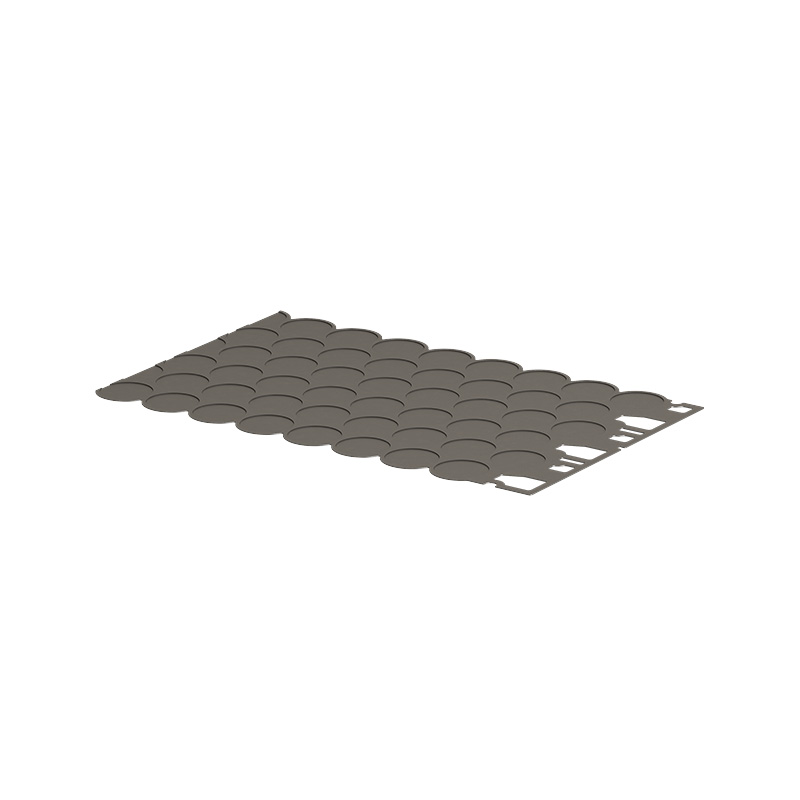
When sourcing or specifying a cylindrical release plate, communicating a complete and unambiguous technical specification to the supplier is essential for receiving a component that performs correctly in service. Incomplete specifications lead to dimensional non-conformances, wrong material grades, inadequate surface finish, or missing features that are discovered only during assembly or early in service life — outcomes that are costly to resolve. The following specifications must be explicitly defined for any cylindrical release plate procurement.
Understanding the failure modes specific to cylindrical release plates helps maintenance engineers and system designers identify the root cause of premature component failure and implement design or operational changes to extend service life. Most release plate failures can be traced back to one of a small number of root causes that, once identified, are straightforward to address.
Progressive wear of the contact face — manifesting as reduced plate thickness, surface roughening, and eventually scoring or grooving — results from repeated engagement and disengagement cycles, particularly if the mating surface is harder, abrasive, or contaminated with particles. In electromagnetic clutches, the armature plate contact face wears against the rotor face, and contamination of the air gap with metal particles from wear debris creates an abrasive environment that accelerates surface degradation. Wear increases the working air gap between armature and rotor, progressively reducing clutch torque capacity until slipping begins. Mitigation includes specifying appropriate contact face hardness, ensuring the lubrication or air quality in the clutch environment is maintained, and establishing an inspection and replacement schedule based on the measured wear rate in service.
Thermal distortion from cyclic heating and cooling during repeated engagement cycles can cause a cylindrical release plate to warp — losing its original flatness and developing a dished, conical, or saddle-shaped contact face. This is most common in applications with high engagement frequency, insufficient thermal mass in the plate, or inadequate cooling of the clutch or brake assembly. A warped release plate makes partial contact with the mating surface, creating high local contact pressure at the high points, rapid local wear, and thermal hot spots that further accelerate distortion. Prevention requires adequate plate thickness and material thermal conductivity for the duty cycle, correct specification of the engagement frequency limit for the application, and thermal management of the assembly (airflow, oil cooling, or heat sink provisions) to limit the plate's steady-state operating temperature.
In humid, chemically aggressive, or outdoor environments, corrosion of carbon steel cylindrical release plates causes surface pitting and oxide layer buildup that degrades contact face quality, increases contact resistance in electromagnetic applications, and can cause the plate to seize against mating surfaces if corrosion products bridge the release gap. Prevention requires specifying an appropriate corrosion protection coating for the environment (zinc plating for mild environments, zinc-nickel or electroless nickel for moderate environments, stainless steel or aluminum for severe environments), maintaining the coating integrity through regular inspection, and ensuring that the release plate operates within an environment that is compatible with its material and coating system. In electromagnetic clutch applications, rust formation on the armature face can cause the plate to stick to the rotor face after de-energization — a failure mode called residual magnetism sticking that is exacerbated by corrosion bridging the air gap.
In applications where the cylindrical release plate is subjected to very high cycle counts — such as high-speed printing machinery, textile equipment, or servo-driven clutches that engage and disengage thousands of times per hour — fatigue cracking can initiate at stress concentration points such as bore edges, keyway corners, spring retention holes, or machined slot features. Fatigue cracks typically propagate radially from the stress concentrator outward toward the plate periphery, eventually causing the plate to fracture into sectors. Prevention involves generous fillet radii at all internal corners, avoiding sharp notches in the plate geometry, specifying material with adequate fatigue strength for the applied stress cycle, and establishing a finite service life (in cycles) for the release plate with scheduled replacement before the calculated fatigue life is reached.
Selecting a cylindrical release plate for a new design or as a replacement component requires a systematic approach that addresses the mechanical, magnetic, thermal, and environmental requirements simultaneously. The following framework provides a practical step-by-step selection process for engineers and procurement specialists.

 Applet
Call Center:
 Tel:+86-0512-63263955
 Email :[email protected]
Copyright © Goode EIS (Suzhou) Corp LTD
 Insulating Composite Materials and Parts for Clean Energy Industry


 cn
cn English