During a recent visit to a battery module assembly line, I watched an operator press a thin insulating pad against a prismatic cell and slide a small plastic clip over the edge. The entire operation took about two seconds and looked almost trivial. Yet that small clip is the part that holds the insulation in place for the entire service life of the pack — through vibration, thermal cycling, and, in a worst case, a thermal event.
The car battery binder clip is one of the least expensive components in an EV battery pack, but it has an outsized impact on cell fixation, electrical insulation, and thermal runaway protection. This article explains what this component actually does, why cell-level retention deserves more engineering attention than it usually receives, and what to verify before approving a binder clip for production.
Content
In EV battery engineering, a binder clip — also called a cell fixation clip or an insulation retaining clip — is a mechanical clamp used at cell level to secure insulating and protective materials to the surface of a battery cell. Typical applications include fixing a rigid mica insulation pad, a flexible thermal pad, or a prismatic cell cover against the cell body so that the material cannot slide, lift, or rattle.
The clip performs a purely mechanical function, but its failure modes are electrical and thermal. If the insulation it retains shifts by even a few millimeters, the creepage distance between a high-voltage terminal and the module housing can drop below the design value. If the clip relaxes over time, a thermal pad can lose intimate contact with the cell surface, which slows heat transfer and delays temperature detection when it matters most.
Goode EIS positions the binder clip inside its Thermex battery cell protection portfolio, alongside GA100, GA200, and GA310 thermal pads, the GM02 mica fiberglass pad, rigid mica insulation pads, and prismatic cell covers. The binder clip is designed to work as part of that layered system rather than as a standalone commodity.
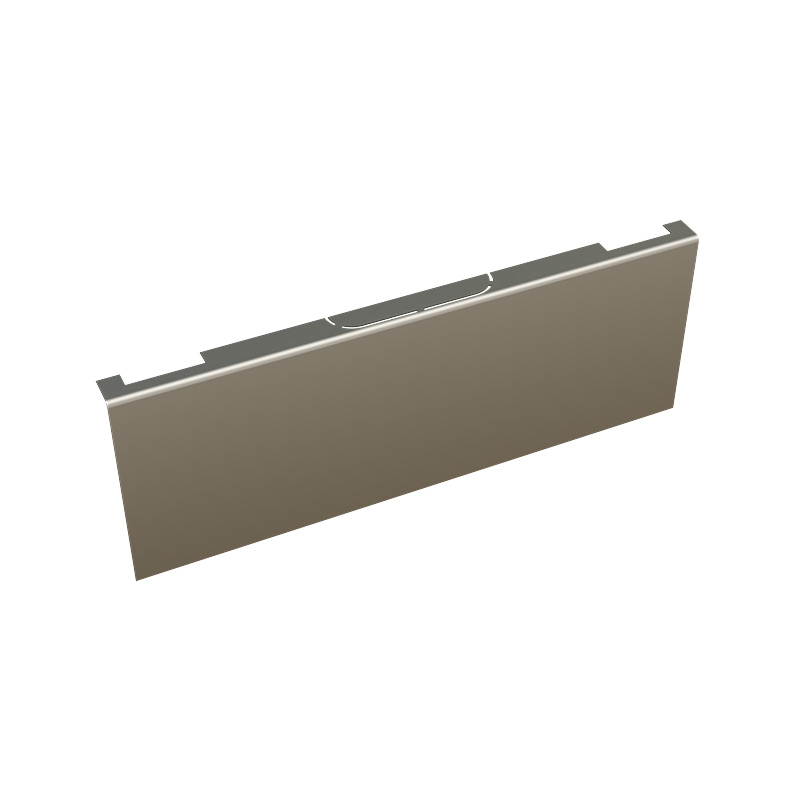 Goode Thermex Binder Clip for Battery Cell Flame DeflectionThis binder clip secures protective layers and redirects flames away from sensitive battery areas, supporting the layered Thermex system. Its heat-resistant design helps prevent fire spread and arcing in prismatic cell assemblies.View Product →
Cell-level protection materials only work when they stay where they were validated. A mica pad that is correctly specified but loosely held can create exactly the kind of problem it was meant to prevent.
The table below summarizes the most common failure modes at cell level and the role a properly designed binder clip plays in each case.
| Failure mode | What happens without proper retention | How the binder clip helps |
|---|---|---|
| Vibration displacement | Insulation shifts and exposes cell surfaces | Keeps pads and covers in their validated position |
| Thermal cycling | Insulation loses contact as cell dimensions change | Maintains continuous contact with the cell body |
| Assembly misalignment | Cell-to-cell clearances become inconsistent | Provides a fixed reference during module assembly |
| Thermal event exposure | Insulation separates from a deforming cell surface | Retains the barrier layer longer during deformation |
None of these failure modes is exotic. They are routine consequences of vehicle vibration, rapid temperature swings, and the dimensional changes cells undergo during charging and discharging. During a thermal event, cell materials can soften and deform, and a well-designed binder clip delays the detachment of protective layers, keeping the barrier in place longer even as the cell structure changes. That extra time can be decisive in preventing propagation to adjacent cells. A binder clip with the right retention force, material grade, and dimensional fit removes an entire family of field failures before it reaches the customer.
Because the binder clip looks simple, purchasing teams often treat it as a low-risk commodity. That assumption is responsible for many of the retention problems found in battery pack warranty returns. Use the following checklist when evaluating a binder clip for your battery design.
An effective cell protection concept rarely relies on a single material. It combines several layers, each performing a different function. Consider a typical prismatic-cell module within the Thermex system.
The rigid mica insulation pad provides electrical insulation and arc resistance around the cell terminals.
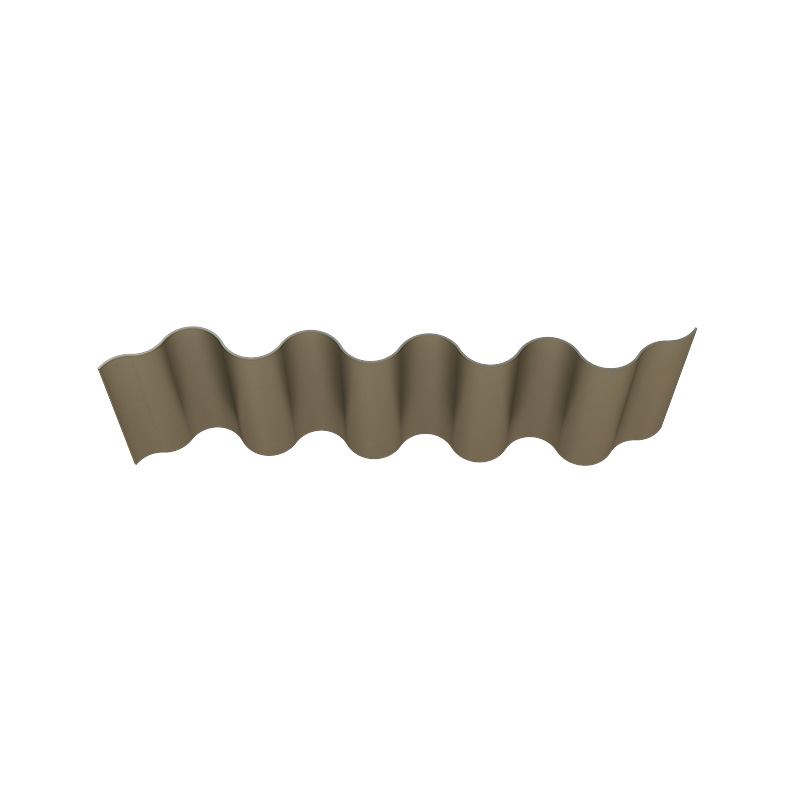 Goode Rigid Mica Insulation Pad for Battery Cell SeparationA rigid mica pad offering thermal insulation and electrical isolation between cells, with flame-retardant properties and structural support. It helps prevent thermal runaway and extends battery pack life in EVs and storage systems.View Product →
A thermal pad such as GA100 — a construction of PU foam, aerogel, and PET film — fills the interface and conducts heat away from the cell during normal operation.
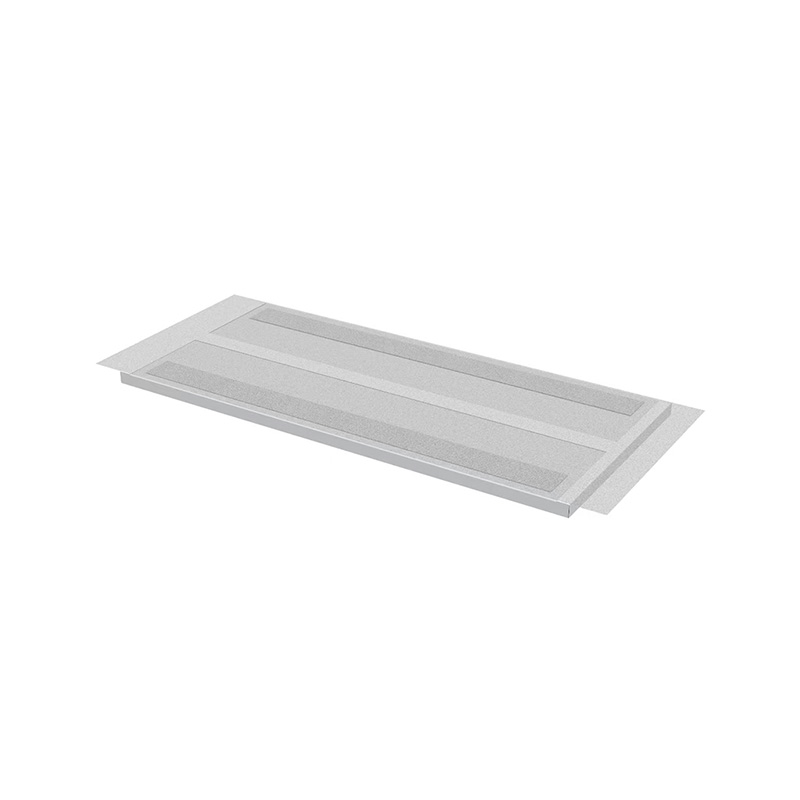 Goode GA100 Thermal Pad with PU Foam, Aerogel, and PET FilmThis flexible composite pad conducts heat away from cells while providing cushioning and flame retardancy. Its adhesive backing and tear lines allow precise installation, improving battery module assembly efficiency.View Product →
The prismatic cell cover adds coverage where the cell geometry needs it, and the binder clip keeps all of these layers fixed against the cell body.
In this arrangement, the binder clip is what makes the concept repeatable. A thermal pad that sits perfectly during prototype assembly will migrate over a 10-year service life unless something mechanical is holding it in place. Even a small gap matters: an air gap of a fraction of a millimeter between a thermal pad and the cell surface measurably increases thermal resistance and slows the response of the battery management system.
The same principle continues at module and pack level. The cell-level binder clip works together with module covers, end plates, and pack-level protection such as housing floor protection and top-cover fireproofing to provide end-to-end thermal runaway protection. You can trace this logic from cell to pack in Goode's pack-level protection guide.
The compact size of the binder clip makes it easy to overlook during supplier selection. But the consequences of a poorly designed clip are expensive to discover, because they tend to appear after vehicle delivery in the form of insulation displacement, reduced dielectric margins, or accelerating cell heating.
Goode EIS, headquartered in Suzhou with production sites in Binzhou, Luhe, and Mexico, develops the binder clip as part of its Thermex family of cell, module, and pack protection solutions. That matters in practice: the clip is engineered together with the mica pads and thermal pads it is meant to retain, so material interfaces, hardness, and friction behavior are considered as a system rather than in isolation.
When you evaluate a supplier, ask for dimensional measurement reports at the actual cell tolerance extremes, retention force data before and after thermal aging, and test results from a module-level vibration profile. If a supplier cannot provide these, the clip may be acceptable as a plastic part — and unproven as a battery component. From a procurement perspective, the cost difference between a well-engineered clip and a basic commodity clip is negligible compared with the field-service cost of a removed cell, so choosing on unit price alone is rarely a rational trade-off.

 Applet
Call Center:
 Tel:+86-0512-63263955
 Email :[email protected]
Copyright © Goode EIS (Suzhou) Corp LTD
 Insulating Composite Materials and Parts for Clean Energy Industry


 cn
cn English