Content
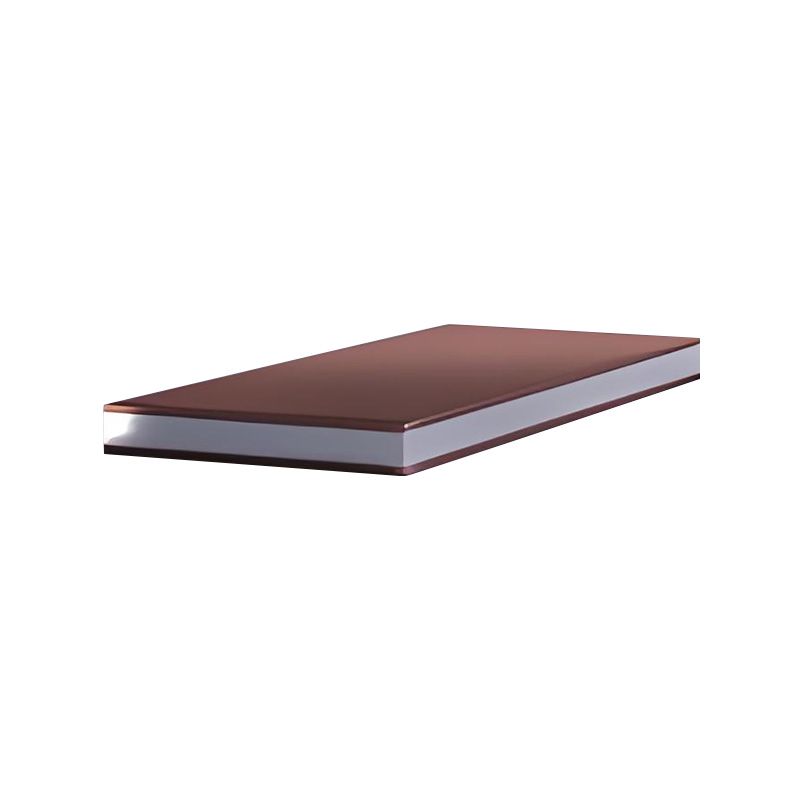
Cu-Al composite materials — copper-aluminum composites — are multi-layer or mixed-phase materials that bond copper and aluminum together into a single structural unit, deliberately combining the strengths of both metals while mitigating the individual weaknesses of each. Copper offers outstanding electrical conductivity (59.6×10⁶ S/m), high thermal conductivity (385 W/m·K), excellent corrosion resistance, and reliable solderability. Aluminum offers low density (2.7 g/cm³ versus copper's 8.96 g/cm³), high strength-to-weight ratio, good corrosion performance in air, and dramatically lower raw material cost. Used alone, each metal has clear limitations for demanding applications. Used together in a well-engineered composite, they deliver performance combinations that neither material can achieve independently.
The fundamental engineering challenge that copper-aluminum composite materials address is the conflict between electrical or thermal performance requirements and weight or cost constraints. In power transmission busbars, for example, pure copper delivers excellent conductivity but adds substantial weight and cost to large switchgear installations. Pure aluminum busbars reduce weight and cost but have lower conductivity and require special joint preparation to manage the insulating aluminum oxide surface layer. A copper-clad aluminum (CCA) busbar — an aluminum core with copper cladding on all surfaces — delivers conductivity close to copper where it matters most (at the surface, where AC current concentrates due to the skin effect), with aluminum's weight and cost advantages in the bulk cross-section.
Cu-Al composite materials are not a single product category but a family of material architectures that includes roll-bonded bimetal strips, explosive welded plates, co-extruded profiles, powder metallurgy composites, and electrodeposited copper-on-aluminum structures. Each manufacturing method produces a different interface quality, layer thickness ratio, and mechanical property profile suited to specific application requirements. Understanding which composite architecture is appropriate for a given use case is the first and most critical step in successfully applying these materials.
The bonding interface between copper and aluminum is the defining structural feature of any Cu-Al composite. Copper and aluminum have very different crystal structures, thermal expansion coefficients, and melting points, which means creating a metallurgically sound, void-free bond between them requires carefully controlled process conditions. Each manufacturing method achieves this bond through a different physical mechanism, producing interfaces with different strength, continuity, and intermetallic compound formation characteristics.
Roll bonding is the most widely used process for producing copper-clad aluminum strip and sheet. The copper and aluminum layers are surface-prepared by wire brushing or chemical etching to remove oxide films and contamination, then pressed together under high rolling mill pressure — typically achieving 50–70% thickness reduction in a single pass. The pressure causes asperities on both surfaces to plastically deform and interlock, creating atomic-level contact and solid-state diffusion bonding without melting either material. The resulting bond is metallurgically continuous and free of the brittle Cu-Al intermetallic phases (CuAl₂, Cu₉Al₄) that form when copper and aluminum are joined at elevated temperatures. Roll-bonded CCA strip is produced in continuous coil form and is the primary feedstock for copper-clad aluminum wire, busbar strip, and battery tab material used in high-volume manufacturing.
Explosive welding uses the energy of a controlled detonation to drive copper and aluminum plates together at extremely high velocity — typically 200–500 m/s — creating a collision pressure in the gigapascal range that produces plastic jetting at the interface and wipes away oxide films instantaneously. The result is a wavy, mechanically interlocked bond with shear strength often exceeding that of the softer base metal. Explosive welded Cu-Al transition joints are used specifically in applications where thick plates must be bonded and where the joint will experience high mechanical loading — aluminum bus connections in naval vessels, transition joints between copper and aluminum piping in cryogenic systems, and structural transition plates in large electrical equipment. The process is limited to flat or simple curved geometries and requires specialist facilities, making it appropriate for low-to-medium volume production of large, high-value components rather than high-volume strip production.
Co-extrusion processes form Cu-Al composite profiles by simultaneously extruding copper and aluminum through a shaped die, bonding them under the extreme pressure and temperature conditions inside the extrusion press. This method is used to produce complex cross-section profiles — such as copper-clad aluminum busbars with specific aspect ratios and surface copper thickness distributions — that would be difficult or expensive to produce by roll bonding and subsequent forming. Continuous casting processes for Cu-Al composites cast molten aluminum around a pre-formed copper core or insert, with rapid solidification controlling the intermetallic layer thickness at the bond interface. Process control is critical because prolonged contact between liquid aluminum and solid copper above approximately 400°C promotes the growth of brittle intermetallic layers that reduce joint strength and electrical conductivity at the interface.
Powder metallurgy Cu-Al composites are produced by blending copper and aluminum powders (or copper particles in an aluminum matrix) and consolidating them by sintering, hot pressing, or spark plasma sintering (SPS). This method allows precise control of composition, particle size distribution, and microstructure, producing composites with isotropic properties and the ability to incorporate reinforcing phases. These materials are used in high-performance thermal management substrates, electrical contact materials, and aerospace structural components where conventional sheet or plate composite forms are inappropriate. Electrodeposition of copper onto aluminum substrates produces thin, highly uniform copper coatings for printed circuit board applications, EMI shielding, and decorative or functional plating — a different application family from the bulk structural composites produced by rolling and welding processes.
The properties of a Cu-Al Ccomposite Materials depend on three variables: the properties of each constituent material, the volume fraction of each layer or phase, and the quality and geometry of the bonding interface. For layered composites such as copper-clad aluminum strip, the rule of mixtures provides a useful first approximation for properties that scale linearly with volume fraction, such as density and electrical conductance. Properties that depend on interface integrity — tensile bond strength, fatigue resistance, and peel strength — must be measured directly for each composite architecture and cannot be calculated from constituent properties alone.
| Property | Pure Copper | Pure Aluminum | Cu-Al Composite (15% Cu) |
|---|---|---|---|
| Density (g/cm³) | 8.96 | 2.70 | ~3.63 |
| Electrical Conductivity (% IACS) | 100% | 61% | ~65–75% |
| Thermal Conductivity (W/m·K) | 385 | 205 | ~220–260 |
| Tensile Strength (MPa) | 210–390 | 70–270 | ~150–300 |
| Coefficient of Thermal Expansion (×10⁻⁶/K) | 17.0 | 23.1 | ~21–22 |
| Relative Material Cost | High | Low | Moderate |
The mismatch in thermal expansion coefficient between copper (17×10⁻⁶/K) and aluminum (23.1×10⁻⁶/K) creates thermal stress at the bond interface during temperature cycling. For applications that experience large or rapid temperature swings — power electronics substrates, EV battery connections, and outdoor electrical hardware — this CTE mismatch must be accounted for in the design. Thin copper cladding layers on thicker aluminum substrates reduce the absolute magnitude of differential expansion stress, and the ductility of both metals allows plastic accommodation of some mismatch strain. However, cyclic fatigue at the interface remains the primary long-term failure mode for Cu-Al composites in thermally demanding service, and life prediction requires understanding the thermal cycle amplitude, frequency, and composite layer geometry specific to the application.
Cu-Al composite materials have found their most significant industrial uptake in electrical power transmission, battery technology, heat exchangers, and electronics packaging — sectors where the combination of high conductivity, reduced weight, and cost efficiency creates compelling value propositions that pure copper or aluminum alone cannot match.
Copper-clad aluminum (CCA) wire consists of an aluminum core with a continuous copper outer layer, typically comprising 10–15% of the cross-sectional area. For high-frequency applications — coaxial cables, RF transmission lines, and signal cables above approximately 5 MHz — the skin effect confines current flow to the outer copper layer, making the aluminum core electrically transparent. CCA wire delivers the same high-frequency electrical performance as solid copper wire at approximately 40% of the weight and 50–60% of the material cost. This makes it the dominant conductor choice in coaxial cable for cable television distribution, satellite dish cabling, and antenna downleads worldwide. For power frequency (50/60 Hz) applications, the aluminum core contributes meaningfully to current carrying capacity, and CCA power cables achieve approximately 75–80% of the current capacity of equivalent-diameter solid copper cable at roughly 45% of the weight — a compelling trade-off for building wiring, automotive harnesses, and overhead distribution applications where weight and cable management matter.
Lithium-ion battery cells in EV applications use two different terminal materials: aluminum for the positive terminal and nickel-plated steel or pure nickel for the negative terminal in standard designs. Connecting these dissimilar terminals in series or parallel through busbars or tabs requires either separate conductors for each terminal type or a composite material that transitions between aluminum and copper/nickel within a single component. Copper-clad aluminum tabs and bimetal transition strips are increasingly used in battery module assembly to simplify the interconnect design — the aluminum face bonds to the aluminum positive terminal by ultrasonic welding, while the copper face provides a solderable, weldable, or bolted connection surface compatible with copper busbars. This eliminates the galvanic corrosion risk that arises when copper hardware is bolted directly to aluminum cell terminals without a transition material.
Copper-clad aluminum busbars are a direct weight and cost reduction strategy for large electrical installations — data centers, industrial switchgear, power distribution boards, and renewable energy inverter systems — where copper busbar weight and material cost are significant factors in the total installation budget. A CCA busbar with 10–20% copper by cross-sectional area achieves approximately 80–85% of the current-carrying capacity of an equivalent-dimension pure copper busbar, at roughly 45–50% of the weight and 55–65% of the material cost at typical copper-aluminum price differentials. The copper surface provides full compatibility with standard copper joint preparation techniques — tin plating, silver plating, or bare copper bolted connections — without the special joint compound, Belleville washers, and inspection requirements associated with aluminum-to-copper connections in electrical codes.
In automotive and HVAC heat exchangers, the combination of aluminum's low density and corrosion resistance with copper's superior thermal conductivity drives interest in Cu-Al composite fin and tube structures. Brazed aluminum heat exchangers dominate modern automotive air conditioning and oil cooling applications due to their light weight and established manufacturing infrastructure. Copper-insert or copper-lined aluminum heat exchanger designs appear in applications where the thermal performance gap between aluminum and copper is significant — certain electronics cooling cold plates, power module substrates, and high-flux heat sinks — and where the weight penalty of pure copper is unacceptable. Copper microchannels or copper inserts within an aluminum body structure can enhance local heat spreading while keeping the overall assembly weight close to an all-aluminum design.
Galvanic corrosion is the most significant reliability challenge when working with Cu-Al composite materials in service environments involving moisture or condensation. Copper and aluminum are separated by approximately 0.5–0.7V in the galvanic series in seawater, making aluminum strongly anodic relative to copper. When both metals are in electrical contact and wetted by an electrolyte — even atmospheric condensation with dissolved industrial pollutants — aluminum acts as the sacrificial anode and corrodes preferentially at the contact zone. This corrosion produces aluminum oxide and hydroxide deposits that increase contact resistance, generate expansion stress in the joint, and ultimately cause mechanical and electrical failure of the connection.
In well-manufactured Cu-Al composites where the bond interface is metallurgically continuous and the aluminum is fully encapsulated by copper cladding, the galvanic couple is effectively suppressed because the aluminum surface is not exposed to the environment. The risk arises at cut edges, machined surfaces, and terminal areas where the aluminum core is exposed. Best practice for Cu-Al composite components in corrosive environments includes tinning or silver-plating all exposed edges and terminal areas, applying joint compound to bolted connection interfaces, maintaining IP-rated enclosure protection to exclude moisture, and using compatible fastener and hardware materials (stainless steel or tin-plated copper hardware rather than bare steel).
At elevated temperatures above approximately 200°C, copper and aluminum interdiffuse across the bond interface to form intermetallic compounds — primarily CuAl₂ (θ phase) and Cu₉Al₄ (γ phase). These intermetallics are brittle, have poor electrical conductivity relative to the pure metals, and grow continuously at a rate that accelerates with temperature. In roll-bonded CCA strip produced and used at ambient temperatures, intermetallic growth is negligible over the product's service life. In applications involving sustained high temperatures — solder reflow processes for electronics assembly, high-current joints that run hot in service, or annealing treatments applied after composite forming — intermetallic growth must be carefully managed. Specifying a maximum process temperature and duration, and verifying intermetallic layer thickness by cross-sectional metallographic examination, are standard quality assurance practices for Cu-Al composite components in high-temperature service.
Cu-Al composite materials can be processed by most standard metalworking operations, but the presence of two mechanically dissimilar layers requires attention to tooling, cutting parameters, and joining methods to avoid delamination, preferential material removal, or joint degradation.
Roll-bonded CCA strip can be cut by shearing, punching, and laser cutting using standard tooling, with the primary consideration being that copper and aluminum have different yield strengths and work-hardening rates. Sharp tooling is essential to produce clean cut edges without burring or delamination at the interface. In progressive die stamping — the standard process for high-volume battery tab and connector production — die clearance must be optimized for the composite stack rather than either individual layer alone. Bending and forming operations must account for the different springback behavior of copper and aluminum, which can cause the composite strip to curve toward the copper side after release from the bending tool if the neutral axis is not at the geometric center of the composite cross-section.
Joining Cu-Al composites to themselves or to other components requires careful method selection to avoid the brittle intermetallic formation that occurs with conventional fusion welding. The preferred methods are:
Ordering Cu-Al composite material without a complete specification is one of the most common causes of performance problems and supplier misalignment in projects that use these materials for the first time. The specification must go beyond nominal dimensions to capture the interface quality, layer thickness tolerances, and performance verification tests that define a fit-for-purpose composite.
Working with a supplier that provides material certifications including chemical composition, mechanical test results, electrical conductivity measurements, and bond interface quality data for each production lot enables effective incoming quality control and provides traceability documentation essential for applications in automotive, aerospace, and regulated energy infrastructure sectors. The incremental effort of establishing a complete specification and qualification program upfront is consistently recovered through reduced field failures, warranty claims, and specification disputes over the product's service life.

 Applet
Call Center:
 Tel:+86-0512-63263955
 Email :[email protected]
Copyright © Goode EIS (Suzhou) Corp LTD
 Insulating Composite Materials and Parts for Clean Energy Industry


 cn
cn English