Content
A car battery end plate is a structural component positioned at each end of a battery module, designed to hold the stacked battery cells firmly together and maintain consistent pressure across the entire cell stack. As lithium-ion cells charge and discharge, they naturally expand and contract slightly, a phenomenon known as cell swelling, and without a rigid end plate applying steady compressive force, this swelling can cause cells to shift, lose contact with connecting components, or degrade faster over repeated charge cycles. The end plate essentially acts as a clamp at both ends of the module, working alongside side plates and connecting bars to keep the entire cell stack tightly and evenly compressed throughout the battery's operational life.
Beyond managing cell swelling, the car battery end plate also plays a critical safety role by helping to prevent thermal event propagation between cells and by providing structural reinforcement that protects the battery module from impact forces during a vehicle collision. Because of this dual mechanical and safety function, end plate design has become a key focus area for EV battery engineers.
A well-engineered battery end plate serves several important functions simultaneously, all of which contribute to the overall safety and longevity of the battery pack.
Material selection for a car battery end plate involves balancing strength, weight, and cost, since the end plate must withstand significant compressive force without adding unnecessary mass to the overall vehicle.
Steel offers excellent strength and rigidity, making it a reliable choice for applications where maximum structural support is the priority, though it adds more weight compared to alternative materials, which can be a drawback in weight-sensitive EV designs.
Aluminum end plates are widely used because they provide a strong balance between weight savings and structural performance, helping manufacturers reduce overall pack weight without significantly compromising the clamping force needed to manage cell swelling.
Some manufacturers use fiber-reinforced composite materials for end plates, which can offer a favorable strength-to-weight ratio along with added electrical insulation properties, though they typically come at a higher production cost than metal alternatives.
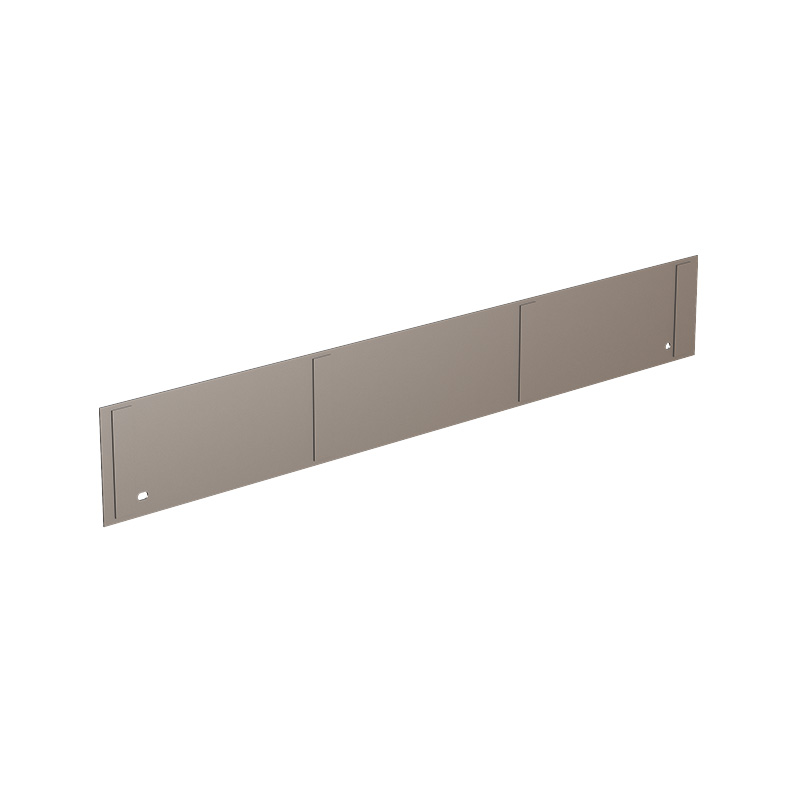
The table below summarizes how common end plate materials compare across key performance factors relevant to battery module design.
| Material | Weight | Structural Strength | Relative Cost |
| Steel | Heavy | Excellent | Low to Moderate |
| Aluminum | Light | Good | Moderate |
| Reinforced Composite | Very Light | Good to Excellent | High |
A car battery end plate rarely functions in isolation. It works together with several other structural components to keep the entire battery module and pack secure and properly aligned.
Side plates run along the length of the cell stack and connect to the end plates, often secured with connecting bars or bolts that maintain overall module rigidity and keep the end plates from bowing outward under sustained cell pressure.
Top and bottom support plates often lock into the end plates as well, creating a fully enclosed structural frame around the cell stack that improves overall pack stiffness and helps distribute crash loads more evenly across the module.
Whether designing a custom battery module or sourcing end plates from a supplier, several factors should be carefully evaluated to ensure long-term reliability and safety performance.
Although often overlooked compared to the battery cells themselves, the car battery end plate plays an essential role in keeping an EV battery module structurally sound, safely managing cell swelling, and providing critical protection during impact events. By understanding the material tradeoffs, structural functions, and integration requirements involved in end plate design, engineers and buyers can make more informed decisions when developing new battery modules or sourcing replacement components. As electric vehicles continue to demand lighter, safer, and more durable battery pack designs, the humble end plate remains one of the most important structural components in the entire system.

 Applet
Call Center:
 Tel:+86-0512-63263955
 Email :[email protected]
Copyright © Goode EIS (Suzhou) Corp LTD
 Insulating Composite Materials and Parts for Clean Energy Industry


 cn
cn English